The 9th (The Dumbartonshire) Battalion, Argyll & Sutherland Highlanders, was a Territorial Force (TF) battalion which, at the beginning of 1914, was headquartered at Dumbarton. A Company recruited men from Helensburgh, B Company from Kirkintilloch, C Company from Dumbarton, D Company from Milngavie, E Company from Jamestown, F Company from Alexandria, and G and H Companies from Clydebank.
Again, and in common with other Territorial Force battalions from this regiment, the numbering up until 1914 is not sequential. As an example, take a look at these enlistments from 1912 and 1913, place of joining indicated in square brackets.
1912 Enlistments
1501 joined on 10th January 1912 [Dumbarton]
1516 joined on 25th January 1912 [Alexandria]
1527 joined on 9th January 1912 [Jamestown]
1533 joined on 30th January 1912 [Jamestown]
1549 joined on 22nd February 1912 [Kirkintilloch]
1613 joined on 12th April 1912 [Clydebank]
1615 joined on 16th April 1912 [Alexandria]
1649 joined on 14th May 1912 [Clydebank]
1660 joined on 5th June 1912 [Clydebank]
1693 joined on 17th June 1912 [Dumbarton]
Service records for all of these 1912 and 1913 survive in the WO 363 and WO 364 series at the National Archives. They can all be viewed on-line via the Ancestry.co.uk website.
1913 Enlistments
1780 joined on 11th February 1913 [Clydebank]
1807 joined on 24th January 1913 [Dumbarton]
1825 joined on 5th February 1913 [Milngavie]
1860 joined on 12th April 1913 [Alexandria]
1861 joined on 14th April 1913 [Renton]
1893 joined on 18th March 1913 [Jamestown]
1920 joined on 1st April 1913 [Dumbarton]
1961 joined on 8th April 1913 [Renton]
2041 joined on 6th November 1913 [Helensburgh]
Renton was the location of the drill station for F Company (headquartered at Alexandria) and I'm just going to pull out the records for those Alexandria and Renton men:
1516 joined on 25th January 1912 [Alexandria]
1615 joined on 16th April 1912 [Alexandria]
1860 joined on 12th April 1913 [Alexandria]
1861 joined on 14th April 1913 [Renton]
1961 joined on 8th April 1913 [Renton]
Looking at this short sequence, 1860 and 1861 seem perfectly logical, 1861 joining two days after 1860. But bearing in mind that a Territorial Force Battalion company probably numbered no more than 125 men, give or take, in 1912; and given that recruitment was slow anyway (and had reached an all time low the previous year), recruiting 100 men into two and a half months (see 1516 and 1615 above) just isn't feasible.
If any logic was applied at all - and one assumes that it must have been - it seems more probable that companies were allocated blocks of numbers and when these were used up, they applied for another block. I should emphasize that this is all supposition on my part - and as a result of interesting communications with the webmaster of the excellent Sons of Galloway website - but I have written to the Argylls Regimental Museum and if I can add any additional concrete information on the Argyll & Sutherland Highlanders' numbering patterns in the Territorial Force battalions, I'll do so.
Also see my posts regarding army service numbers issued to men in the following Argyll & Sutherland Highlanders battalions:
1st & 2nd Argyll & Sutherland Highlanders 1881-1914
3rd (Special Reserve) & 4th (Extra Reserve) Battalion A&S Highlanders
5th Argyll & Sutherland Highlanders (TF)
6th Argyll & Sutherland Highlanders (TF)
7th Argyll & Sutherland Highlanders (TF)
8th Argyll & Sutherland Highlanders (TF)
Argyll & Sutherland Highlanders service battalions 1914-1917
British Army | Regiments | WW1 | World War 1 | First World War | Great War | Regimental numbers | Army numbers | Boer War | Enlistment dates | British regiments | British soldiers | Army Research | British Military History |Records | Volunteer Service Companies | Volunteer Battalion | Territorial Force | TF | Military Genealogy | Military Ancestry | Ancestors | Army Ancestry | Victorian Army | Queen Victoria | Soldiers of the Queen
27 February 2009
26 February 2009
Army photos - an appeal

Help me to illustrate the Army Service Numbers blog.
I'll return to army service numbers issued to the Argyll & Sutherland Highlanders tomorrow. For today though, an appeal.
I like, wherever possible, to illustrate each post with a relevant image. I have done so in some instances already, using a combination of photographs and postcards in my collection as well as those that I have found on-line. Inevitably though, there will be those regiments - and as far as I am concerned, the A&S Highlanders is a good example - for which I have no image at all.
So that's my request. If anybody has suitable images that I could use for any of the battalions and regiments discussed in these posts, I'd be very happy to use them. In return, I can provide a link to the site of your choice (as long as it's non-commercial) and of course give due acknowledgement. You can drop me a line at links@chailey1914-1918.net.
The undated photograph on this post comes from my collection and shows convalescent soldiers snowballing, somewhere in England.
I'll return to army service numbers issued to the Argyll & Sutherland Highlanders tomorrow. For today though, an appeal.
I like, wherever possible, to illustrate each post with a relevant image. I have done so in some instances already, using a combination of photographs and postcards in my collection as well as those that I have found on-line. Inevitably though, there will be those regiments - and as far as I am concerned, the A&S Highlanders is a good example - for which I have no image at all.
So that's my request. If anybody has suitable images that I could use for any of the battalions and regiments discussed in these posts, I'd be very happy to use them. In return, I can provide a link to the site of your choice (as long as it's non-commercial) and of course give due acknowledgement. You can drop me a line at links@chailey1914-1918.net.
The undated photograph on this post comes from my collection and shows convalescent soldiers snowballing, somewhere in England.
25 February 2009
8th Argyll & Sutherland Highlanders

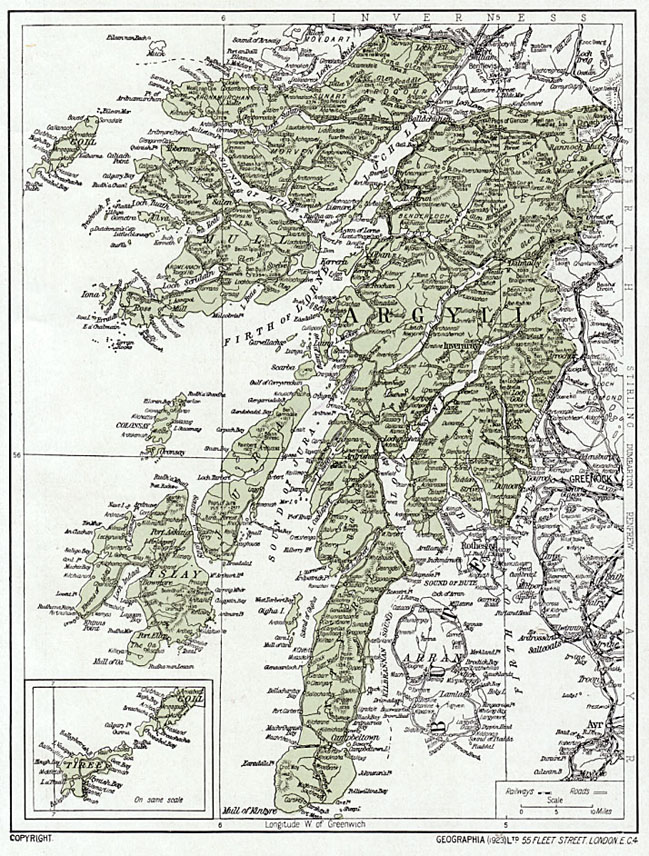
Click on the 1923 map above (courtesy of The Picture Parlour) to get a better picture of the geographical spread covered by the 8th (The Argyllshire) Battalion, Argyll & Sutherland Highlanders. This was a Territorial Force (TF) battalion which, at the beginning of 1914, was headquartered at Dunoon. A Company recruited men from Inverary, B Company from Campbeltown, C Company from Southend, D Company from Dunoon, E Company from Lochgilphead, F Company from Ballachulish, G Company from Bowmore and H Company from Easdale. (Source: The Territorial Force 1914 - Ray Westlake). All Companies, with the exception of D Company (Dunoon), had drill stations in multiple locations.
Early recruits to the 8th A&S Highlanders came from the 5th Volunteer Battalion, Argyll & Sutherland Highlanders. As with the 6th Argyll & Sutherland Highlanders, numbering in this battalion - starting from 1 in April 1908 - does not always follow a logical, sequential path and so for the time being I'm going to start the series on the Bank Holiday Monday, August 1914; the day before Britain went to war with Germany.
1791 joined on 3rd August 1914
Early recruits to the 8th A&S Highlanders came from the 5th Volunteer Battalion, Argyll & Sutherland Highlanders. As with the 6th Argyll & Sutherland Highlanders, numbering in this battalion - starting from 1 in April 1908 - does not always follow a logical, sequential path and so for the time being I'm going to start the series on the Bank Holiday Monday, August 1914; the day before Britain went to war with Germany.
1791 joined on 3rd August 1914
1941 joined on 4th September 1914
2168 joined on 2nd October 1914
2316 joined on 4th November 1914
2466 joined on 7th December 1914
2592 joined on 4th January 1915
2991 joined on 1st February 1915
3240 joined on 19th March 1915
3267 joined on 6th April 1915
3331 joined on 26th May 1915 [Sup Coy]
3336 joined on 8th June 1915 [Sup Coy]
3366 joined on 5th July 1915
3411 joined on 25th August 1915
3417 joined on 1st September 1915
3468 joined on 12th October 1915
3544 joined on 25th November 1915
3658 joined on 7th December 1915
3760 joined on 8th February 1916
3864 joined on 8th May 1916
4703 joined on 28th June 1916
4748 joined on 13th July 1916
4872 joined on 8th August 1916
5096 joined on 2nd September 1916
5324 joined on 23rd October 1916
5346 joined on 11th November 1916
Note the large jump from 3864 in May 1916 to 4748 the following month. Also, throwing another spanner in the battalion's numbering works are those men from the National Reserve who attested on form E.514 for one year's service at home. Numbers 2201 and 2203 for example, both attested on 4th September 1914. Later, men joining Number 1 Supernumerary Company, attached to the 2/8th A&S Highlanders, would be given numbers that fell perfectly in the sequence being used by the battalion; see the men indicated with [Sup Coy] above.
When the Territorial Force was re-numbered in 1917, the 8th Argyll & Sutherland Highlanders were issued numbers within the range 300001 to 325000. Here are some sample six digit army service numbers from this series:
300048 originally joined on 15th March 1909
Note the large jump from 3864 in May 1916 to 4748 the following month. Also, throwing another spanner in the battalion's numbering works are those men from the National Reserve who attested on form E.514 for one year's service at home. Numbers 2201 and 2203 for example, both attested on 4th September 1914. Later, men joining Number 1 Supernumerary Company, attached to the 2/8th A&S Highlanders, would be given numbers that fell perfectly in the sequence being used by the battalion; see the men indicated with [Sup Coy] above.
When the Territorial Force was re-numbered in 1917, the 8th Argyll & Sutherland Highlanders were issued numbers within the range 300001 to 325000. Here are some sample six digit army service numbers from this series:
300048 originally joined on 15th March 1909
300120 originally joined on 20th February 1912
300182 originally joined on 13th January 1913
300292 originally joined on 26th January 1914
300382 originally joined on 8th August 1914
300518 originally joined on 15th September 1914
300573 originally joined on 8th October 1914
300645 originally joined on 5th November 1914
300861 originally joined on 9th January 1915
301108 originally joined on 11th February 1915
301184 originally joined on 6th April 1915
301268 originally joined on 6th September 1915
301300 originally joined on 1st November 1915
301409 originally joined on 6th December 1915
301495 originally joined on 8th February 1916
301722 originally joined on 15th May 1916
301825 originally joined on 3rd June 1916
302228 originally joined on 18th July 1916
302368 originally joined on 21st August 1916
302561 originally joined on 15th September 1916Also see my posts regarding army service numbers issued to men in the following Argyll & Sutherland Highlanders battalions:
1st & 2nd Argyll & Sutherland Highlanders 1881-1914
3rd (Special Reserve) & 4th (Extra Reserve) Battalion A&S Highlanders
5th Argyll & Sutherland Highlanders (TF)
6th Argyll & Sutherland Highlanders (TF)
7th Argyll & Sutherland Highlanders (TF)
9th Argyll & Sutherland Highlanders (TF)
Argyll & Sutherland Highlanders service battalions 1914-1917
And finally...
BEWARE! As I have illustrated above, it is wrong to assume that numbering sequences in battalions always followed a sequential pattern. They didn't. As the war progressed and casualties grew, large numbers of men were often transferred from one battalion to another and allocated numbers within blocks which did not fit the sequential patterning seen to date. This becomes particularly evident in most battalions from 1916 onwards.
The First World War
During the Great War, The Argyllshire Battalion formed part of the 51st Division (from 12 May 1915), the 61st (2nd South Midland) Division (from 7th February 1918) and finally the 15th (Scottish) Division from 1 June 1918. The following Naval & Military re-reprints may be of interest:
FIFTEENTH (SCOTTISH) DIVISION 1914-1919
This is a fantastic book. I paid £160 for an original copy of this a few years ago. The N&MP re-print is considerably cheaper. Here's what N&MP say about the book:
"The senior of Kitchener’s Second New Army Divisions, the 15th (Scottish) was raised at Aldershot in September 1914 with a nucleus of men surplus to the requirements of the 9th (Scottish) Division and brought up to strength with drafts sent down from Scotland. It arrived in France in July 1915 and its first major battle was at Loos in which it captured its objectives, Loos itself and Hill 70, at a cost of 6, 404 casualties. All five VCs the division was to be awarded were won during the battle, four of them in twenty-four hours at Hill 70. The division remained in this sector till July 1916 when it moved down to the Somme where it achieved a notable success in capturing Martinpuich on 15th September. It took part in the Arras offensive in April 1917 and three months later it was fighting in the Battle of Pilckem Ridge during Third Ypres. It was back in the Arras sector when the German March 1918 offensive was launched and where the division held the enemy drive on Arras. For a short spell in July/August the division was under French command and took part in the capture of Buzancy and neighbouring villages. Total casualties throughout the war amounted to 45,542.
"This is an excellent history, well set out and with very good maps to support the interesting and well-written account of the division’s record. A most useful innovation is the provision of marginal notes which highlight events described in the accompanying text, and the top of each page is dated, a most welcome feature in a fast-moving narrative. A remarkable feature is the number of appendices which take up 192 pages and provide a wealth of detail: Order of Battle; Commanders and Staff both divisional and brigade with all changes; chronology of moves and events; casualties by battalions/units by dates with officers named and other ranks tabulated; complete list of recipients of Honours and Awards, by battalions/units. Of special interest are the operation orders for the Battle of Loos and the translation of a German report on the battle."
"The Highland Division was one of the pre-war Territorial divisions. Its HQ was in Perth with brigade HQs in Aberdeen, Inverness and Stirling. On mobilization the division moved down to its war station in Bedford where it remained, carrying out training till embarking for France in May 1915. During this period six of its battalions were sent to France, three in November 1914 and three in the following March, replaced by two Highland battalions and a brigade of four Lancashire battalions; it is not clear whether the latter were required to wear kilts. They were transferred to the 55th (West Lancashire) Division when that division reformed in France in January 1916 and were replaced, appropriately, by Scottish battalions. It was in May 1915, just as the division arrived in France, that it was designated 51st and the brigades 152nd, 153rd and 154th; by the end of the war the 51st (Highland) Division had become one of the best known divisions in the BEF."
"The author served in the 7th Battalion (TF) Gordon Highlanders, 153rd Brigade, 51st Highland Division, and the period covered runs from their departure for France on 3rd May 1915 to the capture of Beaumont Hamel by the division on 13th November 1916. This is partly personal reminiscence and partly an account of his brigade and division in action. Thus we have extracts from his ‘trench journal’ on various dates describing his battalion’s experiences, but these are often set against a background of the brigade or division operations. It does not replace a divisional history as such but it certainly does give a very good picture of the Highland division at war and of a Highland battalion at war. Names of personalities mentioned are for real - not pseudonyms. This is a well-written account and a very satisfactory read but lacks maps and an index."
24 February 2009
7th Argyll & Sutherland Highlanders
The 7th Battalion, Argyll & Sutherland Highlanders, was a Territorial Force (TF) battalion which, at the beginning of 1914, was headquartered at Stirling. A Company drew men from Stirling, B Company from Stenhousemuir, C Company from Falkirk, D Company from Lennoxtown, E and H Companies from Alloa, F Company from Alva and G Company from Kinross. (Source: The Territorial Force 1914 - Ray Westlake).
The battalion, formed in 1908, took in men who had previously served with the 4th Volunteer Battalion, Argyll & Sutherland Highlanders.
The numbering series used for the 7th A&S Highlanders appears to be a good deal less complicated than that used for the 6th Argyll & Sutherland Highlanders. Typically, there is an exception and that appears to be those D Company men who joined at Lennoxtown and Kilsyth (which is where the drill station for D Company was situated). Up until the end of 1911 at least, their army service numbers appear to be out of step with men joining the other companies.
The following sequences to the end of 1911 show sample army service numbers for the 7th A&S Highlanders. Locations indicated in square brackets are the places of joining. Kilsyth & Lennoxtown men in blue.
Service records for ALL of the army service numbers listed on this post, survive in the WO 363 (burnt documents) and WO 364 (penison) series at the National Archives. They can all be accessed on-line via Ancestry.co.uk
1909
880 joined on 12th January [Falkirk]
942 joined on 7th February [Kilsyth]
1006 joined on 28th January [E - Falkirk]
1016 joined on 25th March [Falkirk]
1038 joined on 8th April [Lennoxtown]
1062 joined on 4th March [Kelty]
1157 joined on 7th April [Kinross]
1910
1219 joined on 24th February [Kilsyth]
1249 joined on 9th February [E - Falkirk]
1285 joined on 23rd April [Kilsyth]
1287 joined on 23rd April [Kilsyth]
1322 joined on 16th December [Kilsyth]
1330 joined on 1st November [Falkirk]
1911
1324 joined on 16th January [Lennoxtown]
1334 joined on 20th February [Falkirk]
1349 joined on 15th March [Kilsyth]
1350 joined on 30th January [Stenhousemuir]
1353 joined on 31st January [Larbert]
1381 joined on 1st April [Kelty]
1382 joined on 11th April [Kelty]
1384 joined on 24th April [Alloa]
1403 joined on 2nd November [Lennoxtown]
1411 joined on 8th November [Lennoxtown]
1415 joined on 7th November [Kinross]
Now admittedly, what I have published above is a very small sample of army service numbers and joining dates for the 7th A&S Highlanders and I would love to see further evidence to support my theory that D Company men were - up until 1911 at least, and for want of a better term - out of kilter with the other companies. By 1912, as I say, the numbering appears to have settled down. I've added some six digit numbers into this following sequence. These were issued when the TF was re-numbered in 1917.
1912
1438 joined on 17th January [Falkirk]
1467 joined on 29th January [Larbert]
1492 joined on 2nd February [Alva]
1515 joined on 18th March [Kilsyth]
1518 joined on 18th March [Kilsyth] later re-numbered 275112
1523 joined on 20th March[Kilsyth]
1534 joined on 26th March[Kinross]
1539 joined on 26th March [Kilsyth]
1553 joined on 27th March [Kilsyth] later re-numbered 275127
1567 joined on 2nd April [Denny]
1583 joined on 18th April [Kelty]
1594 joined on 16th April [Alloa]
1624 joined on 16th May [Alloa] later re-numbered 275160
1625 joined on 17th May [Alloa]
1665 joined on 31st July [Falkirk]
1689 joined on 6th November [Kilsyth]
1701 joined on 14th November [Falkirk] later re-numbered 275196
1727 joined on 5th December [Falkirk]
Here are some further sample army service numbers for the 7th A&S Highlanders from 1913 until 1916.
1784 joined on 21st January 1913
2132 joined on 31st March 1914
2248 joined on 11th August 1914
2359 joined on 7th September 1914
3004 joined on 14th October 1914
3151 joined on 2nd November 1914
3750 joined on 1st February 1915
3821 joined on 20th March 1915
4166 joined on 22nd April 1915
4181 joined on 3rd May 1915
4329 joined on 9th June 1915
4393 joined on 27th July 1915
4433 joined on 19th August 1915
4449 joined on 11th October 1915
4598 joined on 3rd November 1915
4745 joined on 24th January 1916
4824 joined on 2nd March 1916
5018 joined on 27th April 1916
5285 joined on 18th May 1916
5519 joined on 1st June 1916
6166 joined on 4th August 1916
6511 joined on 5th September 1916
6704 joined on 23rd October 1916
6838 joined on 29th November 1916
7274 joined on 29th December 1916
When the Territorial Force was re-numbered in 1917, the 7th A&S Highlanders (as can be seen above) were issued numbers within the block 275001 to 300000.
BEWARE!
As I have illustrated above, it is wrong to assume that numbering sequences in battalions always followed a sequential pattern. They didn't. As the war progressed and casualties grew, large numbers of men were often transferred from one battalion to another and allocated numbers within blocks which did not fit the sequential patterning seen to date. This becomes particularly evident in most battalions from 1916 onwards.
Also see my posts regarding army service numbers issued to men in the following Argyll & Sutherland Highlanders battalions:
1st & 2nd Argyll & Sutherland Highlanders 1881-1914
3rd (Special Reserve) & 4th (Extra Reserve) Battalion A&S Highlanders
5th Argyll & Sutherland Highlanders (TF)
6th Argyll & Sutherland Highlanders (TF)
8th Argyll & Sutherland Highlanders (TF)
9th Argyll & Sutherland Highlanders (TF)
Argyll & Sutherland Highlanders service battalions 1914-1917
The First World War
Two further battalions were formed during the First World War, the 2/7th and 3/7th Argyll & Sutherland Highlanders. The original, 7th Battalion became the 1/7th and, from January 1915, formed part of the 4th Division. In March 1916 it transferred to the 51st (Highland) Division.
The Naval and Military Press has re-published the 51st Divisional History. Here's what it says:
"The Highland Division was one of the pre-war Territorial divisions. Its HQ was in Perth with brigade HQs in Aberdeen, Inverness and Stirling. On mobilization the division moved down to its war station in Bedford where it remained, carrying out training till embarking for France in May 1915. During this period six of its battalions were sent to France, three in November 1914 and three in the following March, replaced by two Highland battalions and a brigade of four Lancashire battalions; it is not clear whether the latter were required to wear kilts. They were transferred to the 55th (West Lancashire) Division when that division reformed in France in January 1916 and were replaced, appropriately, by Scottish battalions. It was in May 1915, just as the division arrived in France, that it was designated 51st and the brigades 152nd, 153rd and 154th; by the end of the war the 51st (Highland) Division had become one of the best known divisions in the BEF."
I haven't read this divisional history but I do have an original copy of Fifty-First in France which I would recommend and which has also been re-published by N&M Press:
Here's the blurb:
"The author served in the 7th Battalion (TF) Gordon Highlanders, 153rd Brigade, 51st Highland Division, and the period covered in the book runs from their departure for France on 3rd May 1915 to the capture of Beaumont Hamel by the division on 13th November 1916. This is an unusual piece of work in that it is partly personal reminiscence and partly an account of his brigade and division in action. Thus we have extracts from his ‘trench journal’ on various dates describing his battalion’s experiences, but these are often set against a background of the brigade or division operations. It does not replace a divisional history as such but it certainly does give a very good picture of the Highland division at war and of a Highland battalion at war. Names of personalities mentioned are for real - not pseudonyms. This is a well-written account and a very satisfactory read but lacks maps and an index."
The battalion, formed in 1908, took in men who had previously served with the 4th Volunteer Battalion, Argyll & Sutherland Highlanders.
The numbering series used for the 7th A&S Highlanders appears to be a good deal less complicated than that used for the 6th Argyll & Sutherland Highlanders. Typically, there is an exception and that appears to be those D Company men who joined at Lennoxtown and Kilsyth (which is where the drill station for D Company was situated). Up until the end of 1911 at least, their army service numbers appear to be out of step with men joining the other companies.
The following sequences to the end of 1911 show sample army service numbers for the 7th A&S Highlanders. Locations indicated in square brackets are the places of joining. Kilsyth & Lennoxtown men in blue.
Service records for ALL of the army service numbers listed on this post, survive in the WO 363 (burnt documents) and WO 364 (penison) series at the National Archives. They can all be accessed on-line via Ancestry.co.uk
1909
880 joined on 12th January [Falkirk]
942 joined on 7th February [Kilsyth]
1006 joined on 28th January [E - Falkirk]
1016 joined on 25th March [Falkirk]
1038 joined on 8th April [Lennoxtown]
1062 joined on 4th March [Kelty]
1157 joined on 7th April [Kinross]
1910
1219 joined on 24th February [Kilsyth]
1249 joined on 9th February [E - Falkirk]
1285 joined on 23rd April [Kilsyth]
1287 joined on 23rd April [Kilsyth]
1322 joined on 16th December [Kilsyth]
1330 joined on 1st November [Falkirk]
1911
1324 joined on 16th January [Lennoxtown]
1334 joined on 20th February [Falkirk]
1349 joined on 15th March [Kilsyth]
1350 joined on 30th January [Stenhousemuir]
1353 joined on 31st January [Larbert]
1381 joined on 1st April [Kelty]
1382 joined on 11th April [Kelty]
1384 joined on 24th April [Alloa]
1403 joined on 2nd November [Lennoxtown]
1411 joined on 8th November [Lennoxtown]
1415 joined on 7th November [Kinross]
Now admittedly, what I have published above is a very small sample of army service numbers and joining dates for the 7th A&S Highlanders and I would love to see further evidence to support my theory that D Company men were - up until 1911 at least, and for want of a better term - out of kilter with the other companies. By 1912, as I say, the numbering appears to have settled down. I've added some six digit numbers into this following sequence. These were issued when the TF was re-numbered in 1917.
1912
1438 joined on 17th January [Falkirk]
1467 joined on 29th January [Larbert]
1492 joined on 2nd February [Alva]
1515 joined on 18th March [Kilsyth]
1518 joined on 18th March [Kilsyth] later re-numbered 275112
1523 joined on 20th March[Kilsyth]
1534 joined on 26th March[Kinross]
1539 joined on 26th March [Kilsyth]
1553 joined on 27th March [Kilsyth] later re-numbered 275127
1567 joined on 2nd April [Denny]
1583 joined on 18th April [Kelty]
1594 joined on 16th April [Alloa]
1624 joined on 16th May [Alloa] later re-numbered 275160
1625 joined on 17th May [Alloa]
1665 joined on 31st July [Falkirk]
1689 joined on 6th November [Kilsyth]
1701 joined on 14th November [Falkirk] later re-numbered 275196
1727 joined on 5th December [Falkirk]
Here are some further sample army service numbers for the 7th A&S Highlanders from 1913 until 1916.
1784 joined on 21st January 1913
2132 joined on 31st March 1914
2248 joined on 11th August 1914
2359 joined on 7th September 1914
3004 joined on 14th October 1914
3151 joined on 2nd November 1914
3750 joined on 1st February 1915
3821 joined on 20th March 1915
4166 joined on 22nd April 1915
4181 joined on 3rd May 1915
4329 joined on 9th June 1915
4393 joined on 27th July 1915
4433 joined on 19th August 1915
4449 joined on 11th October 1915
4598 joined on 3rd November 1915
4745 joined on 24th January 1916
4824 joined on 2nd March 1916
5018 joined on 27th April 1916
5285 joined on 18th May 1916
5519 joined on 1st June 1916
6166 joined on 4th August 1916
6511 joined on 5th September 1916
6704 joined on 23rd October 1916
6838 joined on 29th November 1916
7274 joined on 29th December 1916
When the Territorial Force was re-numbered in 1917, the 7th A&S Highlanders (as can be seen above) were issued numbers within the block 275001 to 300000.
BEWARE!
As I have illustrated above, it is wrong to assume that numbering sequences in battalions always followed a sequential pattern. They didn't. As the war progressed and casualties grew, large numbers of men were often transferred from one battalion to another and allocated numbers within blocks which did not fit the sequential patterning seen to date. This becomes particularly evident in most battalions from 1916 onwards.
Also see my posts regarding army service numbers issued to men in the following Argyll & Sutherland Highlanders battalions:
1st & 2nd Argyll & Sutherland Highlanders 1881-1914
3rd (Special Reserve) & 4th (Extra Reserve) Battalion A&S Highlanders
5th Argyll & Sutherland Highlanders (TF)
6th Argyll & Sutherland Highlanders (TF)
8th Argyll & Sutherland Highlanders (TF)
9th Argyll & Sutherland Highlanders (TF)
Argyll & Sutherland Highlanders service battalions 1914-1917
The First World War
Two further battalions were formed during the First World War, the 2/7th and 3/7th Argyll & Sutherland Highlanders. The original, 7th Battalion became the 1/7th and, from January 1915, formed part of the 4th Division. In March 1916 it transferred to the 51st (Highland) Division.
The Naval and Military Press has re-published the 51st Divisional History. Here's what it says:
"The Highland Division was one of the pre-war Territorial divisions. Its HQ was in Perth with brigade HQs in Aberdeen, Inverness and Stirling. On mobilization the division moved down to its war station in Bedford where it remained, carrying out training till embarking for France in May 1915. During this period six of its battalions were sent to France, three in November 1914 and three in the following March, replaced by two Highland battalions and a brigade of four Lancashire battalions; it is not clear whether the latter were required to wear kilts. They were transferred to the 55th (West Lancashire) Division when that division reformed in France in January 1916 and were replaced, appropriately, by Scottish battalions. It was in May 1915, just as the division arrived in France, that it was designated 51st and the brigades 152nd, 153rd and 154th; by the end of the war the 51st (Highland) Division had become one of the best known divisions in the BEF."
I haven't read this divisional history but I do have an original copy of Fifty-First in France which I would recommend and which has also been re-published by N&M Press:
Here's the blurb:
"The author served in the 7th Battalion (TF) Gordon Highlanders, 153rd Brigade, 51st Highland Division, and the period covered in the book runs from their departure for France on 3rd May 1915 to the capture of Beaumont Hamel by the division on 13th November 1916. This is an unusual piece of work in that it is partly personal reminiscence and partly an account of his brigade and division in action. Thus we have extracts from his ‘trench journal’ on various dates describing his battalion’s experiences, but these are often set against a background of the brigade or division operations. It does not replace a divisional history as such but it certainly does give a very good picture of the Highland division at war and of a Highland battalion at war. Names of personalities mentioned are for real - not pseudonyms. This is a well-written account and a very satisfactory read but lacks maps and an index."
23 February 2009
6th Argyll & Sutherland Highlanders - pre 1914 numbers
I've added to my post on the 6th Argyll & Sutherland Highlanders with additional information about army service numbers prior to 1914.
In common with some Territorial Force battalions in some other Scottish Regiments - see the Royal Scots for example - the 6th A&S Highlanders appears to have allocated blocks of numbers within its series to the eight different companies that were in existence up until the First World War. However, whereas differentiating between the number blocks is a relatively straightforward matter with the 8th Royal Scots for instance, with the 6th A&S Highlanders, it's an entirely different matter.
Also see my posts regarding army service numbers issued to men in the following Argyll & Sutherland Highlanders battalions:
1st & 2nd Argyll & Sutherland Highlanders 1881-1914
3rd (Special Reserve) & 4th (Extra Reserve) Battalion A&S Highlanders
5th Argyll & Sutherland Highlanders (TF)
7th Argyll & Sutherland Highlanders (TF)
8th Argyll & Sutherland Highlanders (TF)
9th Argyll & Sutherland Highlanders (TF)
Argyll & Sutherland Highlanders service battalions 1914-1917
In common with some Territorial Force battalions in some other Scottish Regiments - see the Royal Scots for example - the 6th A&S Highlanders appears to have allocated blocks of numbers within its series to the eight different companies that were in existence up until the First World War. However, whereas differentiating between the number blocks is a relatively straightforward matter with the 8th Royal Scots for instance, with the 6th A&S Highlanders, it's an entirely different matter.
Also see my posts regarding army service numbers issued to men in the following Argyll & Sutherland Highlanders battalions:
1st & 2nd Argyll & Sutherland Highlanders 1881-1914
3rd (Special Reserve) & 4th (Extra Reserve) Battalion A&S Highlanders
5th Argyll & Sutherland Highlanders (TF)
7th Argyll & Sutherland Highlanders (TF)
8th Argyll & Sutherland Highlanders (TF)
9th Argyll & Sutherland Highlanders (TF)
Argyll & Sutherland Highlanders service battalions 1914-1917
21 February 2009
Understanding army service numbers

The images reproduced on this post are both Crown Copyright, but I show them here to illustrate one man's war service and the allocation of army service numbers. Click on them both for larger views.
Claudius Beavins attested under the Derby Scheme on 11th December 1915. He was called up for service on the 26th April 1916 and posted to the 3/6th London Regiment the following day. It was at this point that he would have been issued with his first number, 5389.
On the 18th August 1916 he was transferred to the reserve battalion of the 23rd London Regiment; ie the 2/23rd Londons. At this point in time he would have been issued his second army service number, 6788.
Claudius was posted to the 1/23rd Londons on 3rd December 1916 (no change of number here) and was still serving with this battalion when the Territorial Force was renumbered in 1917. He was given the new number, 703068.
On 14th April 1917, he was transferred for a second time, this time to the 13th Londons. His number, 505004, falls within a separate series of numbers issued to 23rd London men transferring to the Kensingtons. (There were also transfers from other London Regiment battalions and other regiments for that matter who received a six digit number within the 505*** range).
It is worth pointing out that at the time Claudius was transferred, in France, to the 13th Londons, the battalion was issuing six digit numbers in England in the 494*** range. The 505*** range therefore illustrates the point I have made on several posts that it is wrong to assume that numbers were always issued sequentially. They weren't.
Claudius transferred for a final time, to the Royal Engineers, on 14th June 1918. He was issued a new number, 361118. He survived the war. Interestingly, his medal index card mixes the order of his numbers up somewhat. As I have explained, 5389 was the first number he was issued with, not 6788.
20 February 2009
6th Argyll & Sutherland Highlanders

Above, Renfrewshire in the 1840s. Click on the image to see a larger version of it.
The 6th (Renfrewshire) Battalion, Princesss Louise's Argyll & Sutherland Highlanders was a Territorial Force (TF) battalion which, at the beginning of 1914, was headquartered at 66 High Street, Paisley. A, B and C Companies drew men from Paisley, D Company from Renfrew, E Company from Johnstone, F Company from Thornliebank, G Company from Barrhead and H Company from Pollokshaws. (Source: The Territorial Force 1914 - Ray Westlake).
In April 1908, upon the formation of the new Territorial Force, men who were serving with the 2nd Volunteer Battalion Argyll & Sutherland Highlanders, were now asked to attest with the newly created 6th Battalion. Many did so.
It appears that although one series of numbers was used for the battalion as a whole (certainly I have not come across any duplicate numbers), different sequences within this series were allocated to specific companies. I list below, for comment as much as anything, army service numbers for this battalion by company headquarters. In most cases, albeit with blips here and there - see G Company as an example - the numbering is largely sequential.
Paisley - A, B & C Companies
1029 - Apr 30th 1909
1089 - Apr 6th 1909
1350 - Jun 21st 1909
1483 - Nov 4th 1910
1505 - Feb 15th 1911
1512 - Mar 15th 1911
1526 - Apr 27th 1911
1583 - May 26th 1911
1601 - Jun 1st 1911
1665 - Apr 5th 1912
1673 - Apr 19th 1912
1699 - Jun 11th 1912
1708 - Jun 25th 1912
Renfrew - D Company
1145 - Mar 15th 1909
1646 - Feb 27th 1912
1648 - Mar 1st 1912
1650 - Jan 16th 1912
1860 - May 23rd 1912
1932 - Jun 30th 1913
Johnstone - E Company
1587 - Nov 4th 1910
1804 - Dec 21st 1911
1812 - Jan 18th 1912
1821 - Jan 23rd 1912
1830 - Apr 8th 1912
1839 - Jun 13th 1912
2061 - Mar 17th 1913
Thornliebank - F Company
1377 - Mar 2nd 1910
1576 - Apr 11th 1911
Barrhead - G Company
1633 - Jul 6th 1911
1723 - Jun 5th 1912
1729 - Mar 30th 1912
2050 - Dec 1st 1912
2039 - Jan 28th 1913
2090 - May 23rd 1913
Pollokshaws - H Company
1760 - Jan 18th 1912
1790 - Apr 18th 1912
1882 - May 28th 1912
2029 - May 6th 1913
3097 - Dec 9th 1913
I am guessing - but I'd like to know for sure - that at some point in mid to late 1913, somebody in authority said words to the effect of, "Look, can we please stop all this messing around with blocks of numbers and just start issuing them in sequence?" There's certainly a leap from the 2000s to the 3000s in 1913 and thereafter, numbering for the battalion as a whole, appears to calm down somewhat.
Incidentally, service records for ALL of the army service numbers listed on this post, survive in the WO 363 and WO 364 series at the National Archives. They can all be accessed on-line via Ancestry.co.uk
Here is a further sample of army service numbers and corresponding joining dates for the 6th A&S Highlanders, starting the day after Britain declared war on Germany.
3307 joined on 5th August 1914
3426 joined on 1st September 1914
4344 joined on 26th October 1914
4437 joined on 4th November 1914
4712 joined on 18th January 1915
4789 joined on 27th March 1915
4830 joined on 1st April 1915
4896 joined on 1st May 1915
5248 joined on 4th June 1915
5367 joined on 12th July 1915
5386 joined on 2nd August 1915
5496 joined on 8th September 1915
5538 joined on 23rd October 1915
5558 joined on 3rd November 1915
5603 joined on 15th December 1915
5615 joined on 14th January 1916
5658 joined on 17th March 1916
5744 joined on 29th April 1916
6109 joined on 3rd May 1916
6495 joined on 25th July 1916
6611 joined on 24th August 1916
6817 joined on 26th September 1916
6915 joined on 6th October 1916
Also see my posts regarding army service numbers issued to men in the following Argyll & Sutherland Highlanders battalions:
1st & 2nd Argyll & Sutherland Highlanders 1881-1914
3rd (Special Reserve) & 4th (Extra Reserve) Battalion A&S Highlanders
5th Argyll & Sutherland Highlanders (TF)
7th Argyll & Sutherland Highlanders (TF)
8th Argyll & Sutherland Highlanders (TF)
1st & 2nd Argyll & Sutherland Highlanders 1881-1914
3rd (Special Reserve) & 4th (Extra Reserve) Battalion A&S Highlanders
5th Argyll & Sutherland Highlanders (TF)
7th Argyll & Sutherland Highlanders (TF)
8th Argyll & Sutherland Highlanders (TF)
Argyll & Sutherland Highlanders service battalions 1914-1917
BEWARE!
As I hope I have illustrated above, it is wrong to assume that numbering sequences in battalions always followed a sequential pattern. They didn't. As the war progressed and casualties grew, large numbers of men were often transferred from one battalion to another and allocated numbers within blocks which did not fit the sequential patterning seen to date. This becomes particularly evident in most battalions from 1916 onwards. For an example of this, see my post on the 23rd London Regiment.
BEWARE!
As I hope I have illustrated above, it is wrong to assume that numbering sequences in battalions always followed a sequential pattern. They didn't. As the war progressed and casualties grew, large numbers of men were often transferred from one battalion to another and allocated numbers within blocks which did not fit the sequential patterning seen to date. This becomes particularly evident in most battalions from 1916 onwards. For an example of this, see my post on the 23rd London Regiment.
When the Territorial Force was re-numbered in 1917, the 6th A&S Highlanders were issued numbers within the range 250001 to 275000.
Links:
19 February 2009
5th Argyll & Sutherland Highlanders
This Territorial Force (TF) battalion was headquartered at Finnart Street, Greenock. The Annual TF Return for 1913, amended to February 1914 reveals that A, B, C, D, F & G Companies drew recruits from Greenock; E Company from Port Glasgow and H Company from Gourock. There was a drill station at Inverkip. (Source: The Territorial Force 1914 - Ray Westlake)
The 5th (Renfrewshire) Batttalion, Princess Louise's Argyll & Sutherland Highlanders was created in 1908 out of what had previously been the 1st Volunteer Battalion, Argyll & Sutherland Highlanders. Close to 600 men from this battalion chose to join the new Territorial Force battalion (and were re-numbered from 1) and around 30 of these men were still on the battalion rolls when the Territorial Force was re-numbered nine years later in 1917.
Here are some sample army service numbers and corresponding joining dates for the 5th A&S Highlanders.
675 joined on 11th June 1908
795 joined on 23rd March 1909
1033 joined on 14th March 1910
1136 joined on 15th February 1911
1287 joined on 26th January 1912
1476 joined on 17th February 1913
1812 joined on 26th May 1914
1846 joined on 6th August 1914
2107 joined on 3rd September 1914
2392 joined on 21st October 1914
2423 joined on 3rd November 1914
2483 joined on 12th January 1915
2528 joined on 3rd February 1915
2578 joined on 6th March 1915
2643 joined on 27th April 1915
2677 joined on 13th May 1915
2703 joined on 1st June 1915
2836 joined on 5th July 1915
2941 joined on 4th August 1915
2999 joined on 12th October 1915
3135 joined on 2nd November 1915
3213 joined on 21st January 1916
3643 joined on 30th March 1916
3777 joined on 1st June 1916
3854 joined on 4th July 1916
4158 joined on 8th November 1916
Also see my posts regarding army service numbers issued to men in the following Argyll & Sutherland Highlanders battalions:
1st & 2nd Argyll & Sutherland Highlanders 1881-1914
3rd (Special Reserve) & 4th (Extra Reserve) Battalion A&S Highlanders
6th Argyll & Sutherland Highlanders (TF)
7th Argyll & Sutherland Highlanders (TF)
8th Argyll & Sutherland Highlanders (TF)
9th Argyll & Sutherland Highlanders (TF)
Argyll & Sutherland Highlanders service battalions 1914-1917
BEWARE!
It is wrong to assume that numbering sequences in battalions always followed a sequential pattern. They didn't. As the war progressed and casualties grew, large numbers of men were often transferred from one battalion to another and allocated numbers within blocks which did not fit the sequential patterning seen to date. This becomes particularly evident in most battalions from 1916 onwards. For an example of this, see my post on the 23rd London Regiment.
Search for 5th Argyll & Sutherland Highlanders' service records, pension records and medal index cards on Ancestry.co.uk - Click here!
FIFTY-SECOND (LOWLAND) DIVISION 1914-1918
Between 24th April 1915 and 25th August 1918, the 1/5th A&S Highlanders formed part of the 157th Brigade in the 52nd (Lowland) Division. The Naval & Military Press has re-printed the divisional history and I quote directly from their review below:
The Lowland Division was a pre-war Territorial division which, in May 1915, was numbered 52nd with brigades 155th, 156th and 157th. In the same month the division embarked for service in Gallipoli. The fighting on Gallipoli is described in detail as is the evacuation, and from time to time tables of casualties are given . During the Gallipoli campaign the division lost by battle casualties at least seventy percent of its officers and over fifty percent of its other ranks.
The second part of the book deals with the two and a half years the division spent in the Middle East, in Sinai and Palestine. In the summer of 1916 the advance into the Sinai desert began, to Romani to El Arish and from there into Palestine where, under Allenby, the division fought in all three battles of Gaza and in operations through to the end of 1917. In April 1918 the 52nd Division was transferred to the Western Front, taking over a sector of the front at Vimy. During the remaining months of the war the division was in action on the Somme, the Scarpe, the Drocourt-Queant line, the Canal du Nord, ending the war not far from Mons.
This is a very full record of the 52nd Division’s part in the Great War with plenty of general interest in addition to active operations, from small patrols to major attacks, acts of bravery and initiative. There is a comprehensive 25-page index but no roll of honour or list of honours and awards and although there are numerous casualty lists in the text there is no final total.
The 5th (Renfrewshire) Batttalion, Princess Louise's Argyll & Sutherland Highlanders was created in 1908 out of what had previously been the 1st Volunteer Battalion, Argyll & Sutherland Highlanders. Close to 600 men from this battalion chose to join the new Territorial Force battalion (and were re-numbered from 1) and around 30 of these men were still on the battalion rolls when the Territorial Force was re-numbered nine years later in 1917.
Here are some sample army service numbers and corresponding joining dates for the 5th A&S Highlanders.
675 joined on 11th June 1908
795 joined on 23rd March 1909
1033 joined on 14th March 1910
1136 joined on 15th February 1911
1287 joined on 26th January 1912
1476 joined on 17th February 1913
1812 joined on 26th May 1914
1846 joined on 6th August 1914
2107 joined on 3rd September 1914
2392 joined on 21st October 1914
2423 joined on 3rd November 1914
2483 joined on 12th January 1915
2528 joined on 3rd February 1915
2578 joined on 6th March 1915
2643 joined on 27th April 1915
2677 joined on 13th May 1915
2703 joined on 1st June 1915
2836 joined on 5th July 1915
2941 joined on 4th August 1915
2999 joined on 12th October 1915
3135 joined on 2nd November 1915
3213 joined on 21st January 1916
3643 joined on 30th March 1916
3777 joined on 1st June 1916
3854 joined on 4th July 1916
4158 joined on 8th November 1916
Also see my posts regarding army service numbers issued to men in the following Argyll & Sutherland Highlanders battalions:
1st & 2nd Argyll & Sutherland Highlanders 1881-1914
3rd (Special Reserve) & 4th (Extra Reserve) Battalion A&S Highlanders
6th Argyll & Sutherland Highlanders (TF)
7th Argyll & Sutherland Highlanders (TF)
8th Argyll & Sutherland Highlanders (TF)
9th Argyll & Sutherland Highlanders (TF)
Argyll & Sutherland Highlanders service battalions 1914-1917
BEWARE!
It is wrong to assume that numbering sequences in battalions always followed a sequential pattern. They didn't. As the war progressed and casualties grew, large numbers of men were often transferred from one battalion to another and allocated numbers within blocks which did not fit the sequential patterning seen to date. This becomes particularly evident in most battalions from 1916 onwards. For an example of this, see my post on the 23rd London Regiment.
Search for 5th Argyll & Sutherland Highlanders' service records, pension records and medal index cards on Ancestry.co.uk - Click here!
FIFTY-SECOND (LOWLAND) DIVISION 1914-1918
Between 24th April 1915 and 25th August 1918, the 1/5th A&S Highlanders formed part of the 157th Brigade in the 52nd (Lowland) Division. The Naval & Military Press has re-printed the divisional history and I quote directly from their review below:
The Lowland Division was a pre-war Territorial division which, in May 1915, was numbered 52nd with brigades 155th, 156th and 157th. In the same month the division embarked for service in Gallipoli. The fighting on Gallipoli is described in detail as is the evacuation, and from time to time tables of casualties are given . During the Gallipoli campaign the division lost by battle casualties at least seventy percent of its officers and over fifty percent of its other ranks.
The second part of the book deals with the two and a half years the division spent in the Middle East, in Sinai and Palestine. In the summer of 1916 the advance into the Sinai desert began, to Romani to El Arish and from there into Palestine where, under Allenby, the division fought in all three battles of Gaza and in operations through to the end of 1917. In April 1918 the 52nd Division was transferred to the Western Front, taking over a sector of the front at Vimy. During the remaining months of the war the division was in action on the Somme, the Scarpe, the Drocourt-Queant line, the Canal du Nord, ending the war not far from Mons.
This is a very full record of the 52nd Division’s part in the Great War with plenty of general interest in addition to active operations, from small patrols to major attacks, acts of bravery and initiative. There is a comprehensive 25-page index but no roll of honour or list of honours and awards and although there are numerous casualty lists in the text there is no final total.
18 February 2009
The creation of the Special Reserve in 1908
Further to comments yesterday regarding the transition in 1908 from Militia to Special Reserve, I've been doing some digging through old Hansard transcriptions for 1907 and 1908. There's a wealth of information (not all of it easily found through Google searches) courtesy of the Hansard Digitisation Project which makes fascinating reading.
This from the Duke of Bedford (who was vehemently opposed to the abolition of the Militia) speaking in a House of Lords Debate that began on 18th February 1908 and continued two days later.
"My Lords, the Army Order of the 23rd December last is one of the most important Orders ever issued by the Army Council. It abolishes the Militia, and attempts to create a new Force which is to be known as the Special Contingent. That force is divided into combatants and non-combatants. The combatants comprise Engineers, Artillery, and Infantry. I propose to deal with the Infantry only, and to begin by reading Paragraph 2 of this Order. Under Section 30 of the Territorial and Reserve Forces Act, a man who has not served in the Regular Forces may, under the provisions of the Reserve Forces Act of 1882, enlist into the Army Reserve. These men will in future be known as Special Reservists. A Special Reservist of the Infantry, then, is a man who has never served with the colours of any regiment of the Line, and who under this Order will not even know to which regiment of the Line he may be drafted when the Reserves are called out. It is proposed to form this Special Infantry Reserve partly by direct enlistment, which began on the 15th January last, and partly by asking Militia officers and men now serving to transfer to the Special Reserve on the abolition of the Militia. One hundred and one Militia battalions are to train this year as Militia, and at the end of their training will be asked to transfer to the Special Reserve. Twenty-three battalions of Militia have been disbanded."
But the Duke of Bedford was too late. As he had stated, the Army Order dealing with the "Scheme for the provision, organization, and training of the Special Reserve required to supplement the Regular Army, and the application of the Scheme to the existing Militia" had already been issued the previous December.
I reproduce below, the copy of that Order (15 pages in total) and I do so with grateful thanks to Graham Stewart who kindly sent me this, along with a lot of other useful reference material which I shall post on this blog in due course. Click on each of the images in order to read the text more clearly.
Various appendices are referenced in the Army Order. I have included these on a separate post: 1907 Army Order - Special Reserve - Appendices I - XI.
.jpg)
.jpg)
.jpg)
.jpg)
.jpg)
.jpg)
.jpg)
.jpg)
.jpg)
.jpg)
.jpg)
.jpg)
.jpg)
.jpg)
This from the Duke of Bedford (who was vehemently opposed to the abolition of the Militia) speaking in a House of Lords Debate that began on 18th February 1908 and continued two days later.
"My Lords, the Army Order of the 23rd December last is one of the most important Orders ever issued by the Army Council. It abolishes the Militia, and attempts to create a new Force which is to be known as the Special Contingent. That force is divided into combatants and non-combatants. The combatants comprise Engineers, Artillery, and Infantry. I propose to deal with the Infantry only, and to begin by reading Paragraph 2 of this Order. Under Section 30 of the Territorial and Reserve Forces Act, a man who has not served in the Regular Forces may, under the provisions of the Reserve Forces Act of 1882, enlist into the Army Reserve. These men will in future be known as Special Reservists. A Special Reservist of the Infantry, then, is a man who has never served with the colours of any regiment of the Line, and who under this Order will not even know to which regiment of the Line he may be drafted when the Reserves are called out. It is proposed to form this Special Infantry Reserve partly by direct enlistment, which began on the 15th January last, and partly by asking Militia officers and men now serving to transfer to the Special Reserve on the abolition of the Militia. One hundred and one Militia battalions are to train this year as Militia, and at the end of their training will be asked to transfer to the Special Reserve. Twenty-three battalions of Militia have been disbanded."
But the Duke of Bedford was too late. As he had stated, the Army Order dealing with the "Scheme for the provision, organization, and training of the Special Reserve required to supplement the Regular Army, and the application of the Scheme to the existing Militia" had already been issued the previous December.
I reproduce below, the copy of that Order (15 pages in total) and I do so with grateful thanks to Graham Stewart who kindly sent me this, along with a lot of other useful reference material which I shall post on this blog in due course. Click on each of the images in order to read the text more clearly.
Various appendices are referenced in the Army Order. I have included these on a separate post: 1907 Army Order - Special Reserve - Appendices I - XI.
.jpg)
.jpg)
.jpg)
.jpg)
.jpg)
.jpg)
.jpg)
.jpg)
.jpg)
.jpg)
.jpg)
.jpg)
.jpg)
.jpg)
17 February 2009
Argyll & Sutherland Highlanders - 3rd & 4th Battalions
This post will look at army service numbers and corresponding joining dates for the 3rd (Special Reserve) Battalion and the 4th (Extra Reserve) Battalion of the Argyll & Sutherland Highlanders between the years 1908 and 1914.
These two battalions, when formed in 1908, did not start numbering from 1 but continued with the series that had been in use by the 3rd and 4th Militia Battalions they were created from. In my experience of looking at service records for men joining these two battalions, it is fairly common to see numbers allocated to 3rd Battalion men prefixed with 3/; far less common to see numbers allocated to 4th Battalion men prefixed with 4/.
The 3rd (Special Reserve) Battalion, Argyll & Sutherland Highlanders
3/4067 joined on 12th July 1908 (but had originally joined the 3rd Militia Bn - and been given the number 4067 - on 23rd November 1905)
3/6129 joined on 23rd March 1909
3/6238 joined on 1st March 1910
6463 joined on 2nd June 1911
3/6646 joined on 31st July 1912
3/6724 joined on 22nd January 1913
3/6952 joined on 2nd June 1914
7077 joined on 8th August 1914
7524 joined on 1st September 1914
7824 joined on 29th October 1914
This is currently the last number on my database for 3rd Battalion men.
The 4th (Extra Reserve) Battalion, Argyll & Sutherland Highlanders
4998 joined on 2nd August 1908
7393 joined on 5th July 1909
8189 joined on 7th January 1910
8338 joined on 17th January 1911
8517 joined on 17th September 1912
8692 joined on 16th August 1913
8822 joined on 15th January 1914
9012 joined on 18th August 1914
9655 joined on 26th August 1914
9709 joined on 12th October 1914
This is currently the last number on my database for 4th Battalion men.
There are a couple of points to note about these series. Certainly, as far as the 4th Battalion is concerned, I have numbers within the range 4998 (published above) to 7130 which were all issued on the 2nd August 1908 to men who noted on their attestation papers that they were already serving with the 4th [Militia] Argyll & Sutherland Highlanders. These men were transferred from the Militia to the Special Reserve, retaining their Militia numbers (see comments below). New recruits joining the Special Reserve were, as I have mentioned, numbered as a continuation of the 4th Militia Bn number series rather than from a new series beginning with 1.
The same practice appears to hold good for 3rd Battalion men, thus 5997 Patrick Boyle who attested with the 3rd Battalion on 10th August 1908 was already a serving member of the 3rd Militia Battalion. He would not live long enough to serve in the First World War, dying of apendicitis in June 1912.
12th July 1908 looks to be the date on which 3rd Militia Battalion men transferred to the 3rd (Special Reserve) Battalion. The 2nd August 1908 appears to be the date on which the 4th Militia Battalion of the A&S Highlanders transferred to the 4th (Extra Reserve) Battalion. Militiamen had three options: to remain as Militiamen, to claim a free discharge or to convert to Special Reservists. By far the majority chose to convert.
Both the 3rd and the 4th Battalions - after the initial rush with old Militia men joining in 1908 - appear to have slowed down to an annual recruitment rate of around 200 men each, until we get to August 1914 of course, when the numbers leap again. My data ends for both battalions in October 1914 and it would appear that recruiting directly into these battalions (or certainly these number series) ceased in the autumn of 1914.
It may be stating the obvious, but it is worth pointing out that when Britain went to war in 1914, many men serving with the 3rd and 4th Battalions were immediately posted to the (regular) 1st and 2nd Battalions and were soon facing German troops in Belgium. Thus 21 year old 3/6061 Private Henry Campbell went missing on 21st October 1914 whilst serving with the 2nd Battalion, but his number belongs to the series used by the 3rd (Special Reserve) Battalion which he had joined on 4th December 1908. He has no known grave and is commemorated on the Ploegsteert Memorial. A note in his file reads, "In accordance with the decision of the Army Council, this soldier is to be regarded for official purposes as having died on or since 21.10.1914."
Find Argyll & Sutherland Highlanders on-line with Ancestry.co.uk - Click here!
Also see my posts regarding army service numbers issued to men in the following Argyll & Sutherland Highlanders battalions:
1st & 2nd Argyll & Sutherland Highlanders 1881-1914
5th Argyll & Sutherland Highlanders (TF)
6th Argyll & Sutherland Highlanders (TF)
7th Argyll & Sutherland Highlanders (TF)
8th Argyll & Sutherland Highlanders (TF)
9th Argyll & Sutherland Highlanders (TF)
Argyll & Sutherland Highlanders service battalions 1914-1917
These two battalions, when formed in 1908, did not start numbering from 1 but continued with the series that had been in use by the 3rd and 4th Militia Battalions they were created from. In my experience of looking at service records for men joining these two battalions, it is fairly common to see numbers allocated to 3rd Battalion men prefixed with 3/; far less common to see numbers allocated to 4th Battalion men prefixed with 4/.
The 3rd (Special Reserve) Battalion, Argyll & Sutherland Highlanders
3/4067 joined on 12th July 1908 (but had originally joined the 3rd Militia Bn - and been given the number 4067 - on 23rd November 1905)
3/6129 joined on 23rd March 1909
3/6238 joined on 1st March 1910
6463 joined on 2nd June 1911
3/6646 joined on 31st July 1912
3/6724 joined on 22nd January 1913
3/6952 joined on 2nd June 1914
7077 joined on 8th August 1914
7524 joined on 1st September 1914
7824 joined on 29th October 1914
This is currently the last number on my database for 3rd Battalion men.
The 4th (Extra Reserve) Battalion, Argyll & Sutherland Highlanders
4998 joined on 2nd August 1908
7393 joined on 5th July 1909
8189 joined on 7th January 1910
8338 joined on 17th January 1911
8517 joined on 17th September 1912
8692 joined on 16th August 1913
8822 joined on 15th January 1914
9012 joined on 18th August 1914
9655 joined on 26th August 1914
9709 joined on 12th October 1914
This is currently the last number on my database for 4th Battalion men.
There are a couple of points to note about these series. Certainly, as far as the 4th Battalion is concerned, I have numbers within the range 4998 (published above) to 7130 which were all issued on the 2nd August 1908 to men who noted on their attestation papers that they were already serving with the 4th [Militia] Argyll & Sutherland Highlanders. These men were transferred from the Militia to the Special Reserve, retaining their Militia numbers (see comments below). New recruits joining the Special Reserve were, as I have mentioned, numbered as a continuation of the 4th Militia Bn number series rather than from a new series beginning with 1.
The same practice appears to hold good for 3rd Battalion men, thus 5997 Patrick Boyle who attested with the 3rd Battalion on 10th August 1908 was already a serving member of the 3rd Militia Battalion. He would not live long enough to serve in the First World War, dying of apendicitis in June 1912.
12th July 1908 looks to be the date on which 3rd Militia Battalion men transferred to the 3rd (Special Reserve) Battalion. The 2nd August 1908 appears to be the date on which the 4th Militia Battalion of the A&S Highlanders transferred to the 4th (Extra Reserve) Battalion. Militiamen had three options: to remain as Militiamen, to claim a free discharge or to convert to Special Reservists. By far the majority chose to convert.
Both the 3rd and the 4th Battalions - after the initial rush with old Militia men joining in 1908 - appear to have slowed down to an annual recruitment rate of around 200 men each, until we get to August 1914 of course, when the numbers leap again. My data ends for both battalions in October 1914 and it would appear that recruiting directly into these battalions (or certainly these number series) ceased in the autumn of 1914.
It may be stating the obvious, but it is worth pointing out that when Britain went to war in 1914, many men serving with the 3rd and 4th Battalions were immediately posted to the (regular) 1st and 2nd Battalions and were soon facing German troops in Belgium. Thus 21 year old 3/6061 Private Henry Campbell went missing on 21st October 1914 whilst serving with the 2nd Battalion, but his number belongs to the series used by the 3rd (Special Reserve) Battalion which he had joined on 4th December 1908. He has no known grave and is commemorated on the Ploegsteert Memorial. A note in his file reads, "In accordance with the decision of the Army Council, this soldier is to be regarded for official purposes as having died on or since 21.10.1914."
Find Argyll & Sutherland Highlanders on-line with Ancestry.co.uk - Click here!
Also see my posts regarding army service numbers issued to men in the following Argyll & Sutherland Highlanders battalions:
1st & 2nd Argyll & Sutherland Highlanders 1881-1914
5th Argyll & Sutherland Highlanders (TF)
6th Argyll & Sutherland Highlanders (TF)
7th Argyll & Sutherland Highlanders (TF)
8th Argyll & Sutherland Highlanders (TF)
9th Argyll & Sutherland Highlanders (TF)
Argyll & Sutherland Highlanders service battalions 1914-1917
16 February 2009
3rd & 4th Londons
I've updated the posts for the 3rd City of London & 4th City of London with some sample army service numbers and corresponding dates within their respective six digit ranges.
Find your London Regiment ancestors on-line with Ancestry.co.uk - Click here!
Argyll & Sutherland Highlanders 1881-1914
The Argyll & Sutherland Highlanders was formed in July 1881 from the 91st (Princess Louise's Argyllshire) Regiment and the 93rd (Sutherland Highlanders) Regiment. Click here to view images on the The House of Labhran website.
This post will look at sample army service numbers and corresponding joining dates for the A&S Highlanders from 1881 until the start of the First World War.
I'd be interested to hear from an expert, why the regiment commenced a new numbering series in 1908, when it was still well below the 19,999 limit set by the King's Regulations for the Army 1904 (Provisional). The original series had certainly extended beyond 108** when a new series was begun in 1908. (10826 was Killed in Action whilst serving with the 2nd Battalion on 10th November 1914 and 10827 Died of Wounds whilst serving with the 1st Battalion on 23rd April 1915).
72 joined on 3rd December 1881
723 joined on 1st March 1883
1447 joined on 11th August 1884
1644 joined on 9th January 1885
2056 joined on 23rd January 1886
2479 joined on 13th January 1887
2967 joined on 25th August 1888
3077 joined on 7th February 1889
3474 joined on 7th March 1890
3980 joined on 7th April 1891
4543 joined on 22nd October 1892
4669 joined on 30th January 1893
5000 joined on 29th January 1894
5363 joined on 15th February 1895
5764 joined on 27th April 1896
5994 joined on 16th January 1897
6439 joined on 25th January 1898
7128 joined on 6th November 1899
7385 joined on 25th January 1900
7901 joined on 25th January 1901
8239 joined on 13th January 1902
9153 joined on 27th February 1903
9366 joined on 7th January 1904
9760 joined on 19th May 1905
10125 joined on 18th June 1906
10576 joined 27th August 1907
New series commences
2 joined on 16th June 1908
254 joined on 15th February 1909
613 joined on 30th August 1910
826 joined on 28th September 1911
962 joined on 8th May 1912
1116 joined on 3rd January 1913
1311 joined on 8th January 1914
1727 joined on 12th August 1914
By the time 1727 joined, and with Britain at war with Germany, men had been flocking to the colours to enlist for "3 years or duration." These latter service enlistment numbers were prefixed with the letter S/, although men who continued to enlist for regular terms of service throughout the war years had no such prefix. Thus, for example, 8203 James Robertson (regular enlistment) joined up on 3rd March 1915, while S/8229 William Christie (service enlistment) joined up four days later.
Find Argyll & Sutherland Highlanders on-line with Ancestry.co.uk - Click here!
Also see my posts regarding army service numbers issued to men in the following Argyll & Sutherland Highlanders battalions:
3rd (Special Reserve) & 4th (Extra Reserve) Battalion A&S Highlanders
5th Argyll & Sutherland Highlanders (TF)
6th Argyll & Sutherland Highlanders (TF)
7th Argyll & Sutherland Highlanders (TF)
8th Argyll & Sutherland Highlanders (TF)
9th Argyll & Sutherland Highlanders (TF)
Argyll & Sutherland Highlanders service battalions 1914-1917
This post will look at sample army service numbers and corresponding joining dates for the A&S Highlanders from 1881 until the start of the First World War.
I'd be interested to hear from an expert, why the regiment commenced a new numbering series in 1908, when it was still well below the 19,999 limit set by the King's Regulations for the Army 1904 (Provisional). The original series had certainly extended beyond 108** when a new series was begun in 1908. (10826 was Killed in Action whilst serving with the 2nd Battalion on 10th November 1914 and 10827 Died of Wounds whilst serving with the 1st Battalion on 23rd April 1915).
72 joined on 3rd December 1881
723 joined on 1st March 1883
1447 joined on 11th August 1884
1644 joined on 9th January 1885
2056 joined on 23rd January 1886
2479 joined on 13th January 1887
2967 joined on 25th August 1888
3077 joined on 7th February 1889
3474 joined on 7th March 1890
3980 joined on 7th April 1891
4543 joined on 22nd October 1892
4669 joined on 30th January 1893
5000 joined on 29th January 1894
5363 joined on 15th February 1895
5764 joined on 27th April 1896
5994 joined on 16th January 1897
6439 joined on 25th January 1898
7128 joined on 6th November 1899
7385 joined on 25th January 1900
7901 joined on 25th January 1901
8239 joined on 13th January 1902
9153 joined on 27th February 1903
9366 joined on 7th January 1904
9760 joined on 19th May 1905
10125 joined on 18th June 1906
10576 joined 27th August 1907
New series commences
2 joined on 16th June 1908
254 joined on 15th February 1909
613 joined on 30th August 1910
826 joined on 28th September 1911
962 joined on 8th May 1912
1116 joined on 3rd January 1913
1311 joined on 8th January 1914
1727 joined on 12th August 1914
By the time 1727 joined, and with Britain at war with Germany, men had been flocking to the colours to enlist for "3 years or duration." These latter service enlistment numbers were prefixed with the letter S/, although men who continued to enlist for regular terms of service throughout the war years had no such prefix. Thus, for example, 8203 James Robertson (regular enlistment) joined up on 3rd March 1915, while S/8229 William Christie (service enlistment) joined up four days later.
Find Argyll & Sutherland Highlanders on-line with Ancestry.co.uk - Click here!
Also see my posts regarding army service numbers issued to men in the following Argyll & Sutherland Highlanders battalions:
3rd (Special Reserve) & 4th (Extra Reserve) Battalion A&S Highlanders
5th Argyll & Sutherland Highlanders (TF)
6th Argyll & Sutherland Highlanders (TF)
7th Argyll & Sutherland Highlanders (TF)
8th Argyll & Sutherland Highlanders (TF)
9th Argyll & Sutherland Highlanders (TF)
Argyll & Sutherland Highlanders service battalions 1914-1917
13 February 2009
1st, 2nd & 5th Londons updates
I've updated the posts for the 1st Londons, 2nd Londons and 5th Londons; adding sample six digit service numbers for the 1st London Regiment and 2nd London Regiment, and including detail on five digit service numbers issued to men transferring into the 5th London Regiment in July 1916.
Find your London Regiment ancestors today with a FREE 14 day trial to Ancestry.co.uk - Click here!
12 February 2009
4th Royal Irish Dragoon Guards - 1882 enlistments
For no other reason than that I find recruitment patterns in regiments endlessly fascinating, I thought I'd turn my attention today to the 4th (Royal Irish) Dragoon Guards, the regiment that holds the distinction of having fired the first shot (by the British Expeditionary Force) in the First World War. For the subject of this post however, I'd like to look at enlistments in 1882.
The previous year, 1881, recruitment had taken place at a snail's pace. This was not at all uncommon in either cavalry or infantry regiments but as far as the 4th Royal Irish Dragoon Guards was concerned, number 2437 joined on 13th January 1881 and by 17th November that year, the regiment had reached 2474: precisely 38 recruits in 11 months.
1882 was a different story altogether and a massive recruitment drive appears to have taken place. I'd like to see official documents or hear from a 4th Dragoon Guards expert on the subject but the surge is remarkable. What follows is a list of recruitments - and these are all first-time enlistments into the regiment - that pretty much covers the entire year. Service records for ALL of the army service numbers listed below, survive in the WO 363 series held at the National Archives in Kew. I have indicated in brackets, where the individual was born but there appears to be no specific regional stronghold.
2480 enlisted 2nd January [b. Grantham, Lincs]
2485 enlisted 24th January [b. Arva, Govan]
2487 enlisted 26th January [b. Maidstone, Kent]
2491 enlisted 11th January [b. Ellon, Aberdeen] SEE BELOW
2493 enlisted 7th February [b. Bermondsey, London]
2494 enlisted 9th February [b. Camberwell, London]
2495 enlisted 10th February [b. Kingston, Surrey]
2499 enlisted 22nd February [b. Killin, Perth]
2500 enlisted 23rd February [b. Gorbals, Lanarkshire]
2504 enlisted 4th March [b. Antrim, Ireland]
2508 enlisted 15th March [b. Barnwood, Glos]
2514 enlisted 17th March [b. Enfield, Middlesex]
2515 enlisted 18th March [b. Stratford, London]
2519 enlisted 22nd April [b. Gravesend, Kent]
2527 enlisted 27th May [b. Sherbrook, Derbys]
2531 enlisted 14th June [b. St Pancras, London]
2532 enlisted 15th June [b. Hawick, Scotland]
2534 enlisted 16th June [b. Yateley, Hants]
2538 enlisted 3rd July [b. UNCLEAR]
2679 enlisted 9th August [b. Tweedmouth, Sco]
2694 enlisted 13th August [b. Ryde, IoW]
2782 enlisted 12th September [b. Malta]
2783 enlisted 14th September [b. Queen's County, Ireland]
2784 enlisted 18th September [b.Hove, Sussex]
2785 enlisted 25th September [b. Glasgow]
2789 enlisted 24th October [b. Lewes, Sussex]
2790 enlisted 9th November [b. Bedford, Beds]
2825 enlisted 8th December [b. Chester, Cheshire]
2830 enlisted 28th December [b. Harrow, Middlesex]
I find this sequence interesting because there appears to be a clear recruitment drive extending roughly from the beginning of the year until around mid September when things slow down again.
Number 2491, highlighted above, is interesting in that his number alone does not appear to fit the general sequence. This man joined on 11th January and then served precisely 14 days before deciding that the army wasn't his cup of tea. He paid ten pounds to buy his discharge, something which a recruit could do within three months of his attestation.
As regards where the men listed above joined their regiment in 1882, 2480 through to 2679 joined at Aldershot, 2694 through to 2785 joined at York, and 2789 onwards joined at Brighton.
Recruitment into this regiment slowed down again dramatically in 1883 (2831 joined on 2nd January and 2867 joined on 6th December) but by 1884 the pattern had reversed again, close to 350 men enlisting that year.
Numerous records for 4th Royal Irish Dragoon Guards servicemen survive at the National Archives. Read them on-line with a FREE 14 day trial to Ancestry.co.uk - Click here!
RECORD OF THE 4TH ROYAL IRISH DRAGOON GUARDS IN THE GREAT WAR, 1914-1918
This from the Naval & Military Press:
On the declaration of war the 4th Dragoon Guards were at Tidworth, part of 2nd Cavalry Brigade under command of Brig Gen H. de B. de Lisle. The regiment crossed to France on 15th August and a week later, the day before Mons, made the first contact with the enemy, a cavalry patrol. Corporal Thomas of ‘C’ Squadron fired the first shot by the BEF and Capt Hornby led the first charge, scattering the Germans, sabring several and taking others prisoner. The regiment remained on the Western Front throughout the war.
"This volume gives a concise account of the regiment’s experiences without much of the personal reminiscence. There is a useful appendix which gives the service details of every officer with any awards and noting casualties, and another contains the Roll of Honour in which the names are listed alphabetically regardless of rank, and on a year by year basis; the total amounted to 16 officers and 175 other ranks."
The previous year, 1881, recruitment had taken place at a snail's pace. This was not at all uncommon in either cavalry or infantry regiments but as far as the 4th Royal Irish Dragoon Guards was concerned, number 2437 joined on 13th January 1881 and by 17th November that year, the regiment had reached 2474: precisely 38 recruits in 11 months.
1882 was a different story altogether and a massive recruitment drive appears to have taken place. I'd like to see official documents or hear from a 4th Dragoon Guards expert on the subject but the surge is remarkable. What follows is a list of recruitments - and these are all first-time enlistments into the regiment - that pretty much covers the entire year. Service records for ALL of the army service numbers listed below, survive in the WO 363 series held at the National Archives in Kew. I have indicated in brackets, where the individual was born but there appears to be no specific regional stronghold.
2480 enlisted 2nd January [b. Grantham, Lincs]
2485 enlisted 24th January [b. Arva, Govan]
2487 enlisted 26th January [b. Maidstone, Kent]
2491 enlisted 11th January [b. Ellon, Aberdeen] SEE BELOW
2493 enlisted 7th February [b. Bermondsey, London]
2494 enlisted 9th February [b. Camberwell, London]
2495 enlisted 10th February [b. Kingston, Surrey]
2499 enlisted 22nd February [b. Killin, Perth]
2500 enlisted 23rd February [b. Gorbals, Lanarkshire]
2504 enlisted 4th March [b. Antrim, Ireland]
2508 enlisted 15th March [b. Barnwood, Glos]
2514 enlisted 17th March [b. Enfield, Middlesex]
2515 enlisted 18th March [b. Stratford, London]
2519 enlisted 22nd April [b. Gravesend, Kent]
2527 enlisted 27th May [b. Sherbrook, Derbys]
2531 enlisted 14th June [b. St Pancras, London]
2532 enlisted 15th June [b. Hawick, Scotland]
2534 enlisted 16th June [b. Yateley, Hants]
2538 enlisted 3rd July [b. UNCLEAR]
2679 enlisted 9th August [b. Tweedmouth, Sco]
2694 enlisted 13th August [b. Ryde, IoW]
2782 enlisted 12th September [b. Malta]
2783 enlisted 14th September [b. Queen's County, Ireland]
2784 enlisted 18th September [b.Hove, Sussex]
2785 enlisted 25th September [b. Glasgow]
2789 enlisted 24th October [b. Lewes, Sussex]
2790 enlisted 9th November [b. Bedford, Beds]
2825 enlisted 8th December [b. Chester, Cheshire]
2830 enlisted 28th December [b. Harrow, Middlesex]
I find this sequence interesting because there appears to be a clear recruitment drive extending roughly from the beginning of the year until around mid September when things slow down again.
Number 2491, highlighted above, is interesting in that his number alone does not appear to fit the general sequence. This man joined on 11th January and then served precisely 14 days before deciding that the army wasn't his cup of tea. He paid ten pounds to buy his discharge, something which a recruit could do within three months of his attestation.
As regards where the men listed above joined their regiment in 1882, 2480 through to 2679 joined at Aldershot, 2694 through to 2785 joined at York, and 2789 onwards joined at Brighton.
Recruitment into this regiment slowed down again dramatically in 1883 (2831 joined on 2nd January and 2867 joined on 6th December) but by 1884 the pattern had reversed again, close to 350 men enlisting that year.
Numerous records for 4th Royal Irish Dragoon Guards servicemen survive at the National Archives. Read them on-line with a FREE 14 day trial to Ancestry.co.uk - Click here!
RECORD OF THE 4TH ROYAL IRISH DRAGOON GUARDS IN THE GREAT WAR, 1914-1918
This from the Naval & Military Press:
On the declaration of war the 4th Dragoon Guards were at Tidworth, part of 2nd Cavalry Brigade under command of Brig Gen H. de B. de Lisle. The regiment crossed to France on 15th August and a week later, the day before Mons, made the first contact with the enemy, a cavalry patrol. Corporal Thomas of ‘C’ Squadron fired the first shot by the BEF and Capt Hornby led the first charge, scattering the Germans, sabring several and taking others prisoner. The regiment remained on the Western Front throughout the war.
"This volume gives a concise account of the regiment’s experiences without much of the personal reminiscence. There is a useful appendix which gives the service details of every officer with any awards and noting casualties, and another contains the Roll of Honour in which the names are listed alphabetically regardless of rank, and on a year by year basis; the total amounted to 16 officers and 175 other ranks."
11 February 2009
The 10th Manchester Regiment
The 10th Manchesters, headquartered at Oldham, was a Territorial Force battalion which, prior to 1908, had been the 6th Volunteer Battalion, the Manchester Regiment. I list below, sample army service numbers and corresponding joining dates for the 10th Battalion, The Manchester Regiment.
240 joined on 7th April 1908
517 joined on 28th January 1909
1056 joined on 3rd March 1910
1243 joined on 11th May 1911
1378 joined on 4th July 1912
1581 joined on 9th October 1913
1668 joined on 30th January 1914
1947 joined on 14th August 1914
2086 joined on 3rd September 1914
3044 joined on 2nd October 1914
3079 joined on 3rd November 1914
3101 joined on 2nd January 1915
3294 joined on 26th February 1915
3337 joined on 22nd March 1915
3356 joined on 6th April 1915
3458 joined on 7th May 1915
3661 joined on 3rd June 1915
3792 joined on 2nd July 1915
3838 joined on 18th August 1915
3851 joined on 4th September 1915
4023 joined on 4th October 1915
4285 joined on 8th November 1915
4454 joined on 9th December 1915
4517 joined on 21st January 1916
4785 joined on 17th February 1916
5056 joined on 10th March 1916
5232 joined on 20th April 1916
5253 joined on 1st May 1916
5423 joined on 24th July 1916
My data currently stops short here. I'll add to this though, in due course.
When the Territorial Force re-numbered in 1917, the 10th Battalion, Manchester Regiment, was allocated numbers within the block 375001 to 400000. Here are some six digit numbers for the 10th Manchesters.
375003 originally joined on 1st April 1908 (and was almost certainly a 6th VB man to boot)
375074 originally joined on 19th July 1909
375102 originally joined on 13th April 1911
375144 originally joined on 9th May 1912
375234 originally joined on 8th December 1913
375310 originally joined on 9th February 1914
375553 originally joined on 4th September 1914
375983 originally joined on 13th October 1914
376069 originally joined on 18th January 1915
376199 originally joined on 6th April 1915
376262 originally joined on 7th May 1915
376397 originally joined on 3rd June 1915
376469 originally joined on 2nd July 1915
376545 originally joined on 27th September 1915
376679 originally joined on 11th November 1915
376841 originally joined on 16th February 1916
377179 originally joined on 20th April 1916
377316 originally joined on 25th July 1916
377597 originally joined on 9th August 1916
377662 originally joined on 18th September 1916
377929 originally joined on 17th October 1916
There was a third series of numbers used by this battalion and that was for (mostly) National Reservists who joined Supernumerary Companies attached to the 10th Battalion. These men, who had often seen previous military experience - and in many cases, several years earlier - signed up for one year's service in the United Kingdom on Army Form. E.514. My data for these men is not extensive, but James Brierley, who joined up at Oldham on 23rd July 1915, is a typical Supernumerary Company man. He was 49 years old and indicated that he had previously served with the 4th King's Lancaster Regiment. When the Royal Defence Corps was formed the following year, he transferred to it, assigned to No. 309 Protection Company. His army service number as a 10th Bn Supernumerary man was 20063. When he joined the RDC (on 29th April 1916) he received a new number: 27064.
James Brierley's service record survives in the WO 363 series which can be accessed on-line via Ancestry.co.uk
Read my other posts on The Manchester Regiment:
The Manchester Regiment, The Regular Battalions 1881-1914
The Manchester Regiment, Special & Extra Reserve Battalions 1908-1914
5th Bn, Manchester Regiment (TF)
6th Bn, Manchester Regiment (TF)
7th Bn, Manchester Regiment (TF)
8th Bn, Manchester Regiment (TF)
9th Bn, Manchester Regiment (TF)
Manchester Regiment Service Battalion numbers 1914-1916
16th, 17th & 18th Manchesters (1st, 2nd and 3rd City Battalions)
19th, 20th & 21st Manchesters (4th, 5th and 6th City Battalions)
22nd, 23rd & 24th Manchesters (7th & 8th City Battalions and the Oldham Pioneers)
A Manchester Pal's War - 9814 Pte Harry Bardsley, 18th Manchesters
Caveat
It is wrong to assume that numbering sequences in battalions always followed a sequential pattern. They didn't. As the war progressed and casualties grew, large numbers of men were often transferred from one battalion to another and allocated numbers within blocks which did not fit the sequential patterning seen to date. This becomes particularly evident in most battalions from 1916 onwards. For an example of this, see my post on the 23rd London Regiment.
240 joined on 7th April 1908
517 joined on 28th January 1909
1056 joined on 3rd March 1910
1243 joined on 11th May 1911
1378 joined on 4th July 1912
1581 joined on 9th October 1913
1668 joined on 30th January 1914
1947 joined on 14th August 1914
2086 joined on 3rd September 1914
3044 joined on 2nd October 1914
3079 joined on 3rd November 1914
3101 joined on 2nd January 1915
3294 joined on 26th February 1915
3337 joined on 22nd March 1915
3356 joined on 6th April 1915
3458 joined on 7th May 1915
3661 joined on 3rd June 1915
3792 joined on 2nd July 1915
3838 joined on 18th August 1915
3851 joined on 4th September 1915
4023 joined on 4th October 1915
4285 joined on 8th November 1915
4454 joined on 9th December 1915
4517 joined on 21st January 1916
4785 joined on 17th February 1916
5056 joined on 10th March 1916
5232 joined on 20th April 1916
5253 joined on 1st May 1916
5423 joined on 24th July 1916
My data currently stops short here. I'll add to this though, in due course.
When the Territorial Force re-numbered in 1917, the 10th Battalion, Manchester Regiment, was allocated numbers within the block 375001 to 400000. Here are some six digit numbers for the 10th Manchesters.
375003 originally joined on 1st April 1908 (and was almost certainly a 6th VB man to boot)
375074 originally joined on 19th July 1909
375102 originally joined on 13th April 1911
375144 originally joined on 9th May 1912
375234 originally joined on 8th December 1913
375310 originally joined on 9th February 1914
375553 originally joined on 4th September 1914
375983 originally joined on 13th October 1914
376069 originally joined on 18th January 1915
376199 originally joined on 6th April 1915
376262 originally joined on 7th May 1915
376397 originally joined on 3rd June 1915
376469 originally joined on 2nd July 1915
376545 originally joined on 27th September 1915
376679 originally joined on 11th November 1915
376841 originally joined on 16th February 1916
377179 originally joined on 20th April 1916
377316 originally joined on 25th July 1916
377597 originally joined on 9th August 1916
377662 originally joined on 18th September 1916
377929 originally joined on 17th October 1916
There was a third series of numbers used by this battalion and that was for (mostly) National Reservists who joined Supernumerary Companies attached to the 10th Battalion. These men, who had often seen previous military experience - and in many cases, several years earlier - signed up for one year's service in the United Kingdom on Army Form. E.514. My data for these men is not extensive, but James Brierley, who joined up at Oldham on 23rd July 1915, is a typical Supernumerary Company man. He was 49 years old and indicated that he had previously served with the 4th King's Lancaster Regiment. When the Royal Defence Corps was formed the following year, he transferred to it, assigned to No. 309 Protection Company. His army service number as a 10th Bn Supernumerary man was 20063. When he joined the RDC (on 29th April 1916) he received a new number: 27064.
James Brierley's service record survives in the WO 363 series which can be accessed on-line via Ancestry.co.uk
Read my other posts on The Manchester Regiment:
The Manchester Regiment, The Regular Battalions 1881-1914
The Manchester Regiment, Special & Extra Reserve Battalions 1908-1914
5th Bn, Manchester Regiment (TF)
6th Bn, Manchester Regiment (TF)
7th Bn, Manchester Regiment (TF)
8th Bn, Manchester Regiment (TF)
9th Bn, Manchester Regiment (TF)
Manchester Regiment Service Battalion numbers 1914-1916
16th, 17th & 18th Manchesters (1st, 2nd and 3rd City Battalions)
19th, 20th & 21st Manchesters (4th, 5th and 6th City Battalions)
22nd, 23rd & 24th Manchesters (7th & 8th City Battalions and the Oldham Pioneers)
A Manchester Pal's War - 9814 Pte Harry Bardsley, 18th Manchesters
Caveat
It is wrong to assume that numbering sequences in battalions always followed a sequential pattern. They didn't. As the war progressed and casualties grew, large numbers of men were often transferred from one battalion to another and allocated numbers within blocks which did not fit the sequential patterning seen to date. This becomes particularly evident in most battalions from 1916 onwards. For an example of this, see my post on the 23rd London Regiment.
9 February 2009
The 9th Manchester Regiment
Before Lord Haldane's changes took place in 1908, the 9th Battalion, Manchester Regiment (a Territorial Force battalion), was the 3rd Voilunteer Battalion, Manchester Regiment. It was headquartered at Ashton-under-Lyne.
Here are some sample army service numbers and corresponding joining dates for the 9th Manchesters.
5 joined on 1st April 1908
946 joined on 28th June 1909
1123 joined on 1st November 1910
1150 joined on 15th May 1911
1273 joined on 25th March 1912
1404 joined on 17th March 1913
1576 joined on 20th January 1914
1997 joined on 4th August 1914
2122 joined on 1st September 1914
2475 joined on 5th October 1914
2845 joined on 2nd November 1914
3183 joined on 1st December 1914
3189 joined on 4th January 1915
3316 joined on 9th February 1915
3451 joined on 7th April 1915
3710 joined on 3rd May 1915
3858 joined on 15th June 1915
3997 joined on 20th September 1915
4027 joined on 2nd October 1915
4233 joined on 13th November 1915
4279 joined on 13th December 1915
4295 joined on 20th January 1916
4431 joined on 8th February 1916
4626 joined on 2nd March 1916
4886 joined on 6th May 1916
5273 joined on 15th July 1916
When the 9th Manchester Regiment re-numbered in 1917, it did so within the range 350001 to 375000.
There is an excellent website devoted to the Ashton Territorials. Click HERE to read more about the men of the 9th Battalion, Manchester Regiment.
Caveat
It is wrong to assume that numbering sequences in battalions always followed a sequential pattern. They didn't. As the war progressed and casualties grew, large numbers of men were often transferred from one battalion to another and allocated numbers within blocks which did not fit the sequential patterning seen to date. This becomes particularly evident in most battalions from 1916 onwards. For an example of this, see my post on the 23rd London Regiment.
Find 9th Manchester service records, pension records and medal index cards with a FREE 14 day trial to Ancestry.co.uk - Click here!
Read my other posts on the Manchester Regiment:
The Manchester Regiment, The Regular Battalions 1881-1914
The Manchester Regiment, Special & Extra Reserve Battalions 1908-1914
5th Bn, The Manchester Regiment (TF)
6th Bn, Manchester Regiment (TF)
7th Bn, Manchester Regiment (TF)
8th Bn, Manchester Regiment (TF)
10th Bn, Manchester Regiment (TF)
Manchester Regiment Service Battalion numbers 1914-1916
16th, 17th & 18th Manchesters (1st, 2nd and 3rd City Battalions)
19th, 20th & 21st Manchesters (4th, 5th and 6th City Battalions)
22nd, 23rd & 24th Manchesters (7th & 8th City Battalions and the Oldham Pioneers)
A Manchester Pal's War - 9814 Pte Harry Bardsley, 18th Manchesters
Here are some sample army service numbers and corresponding joining dates for the 9th Manchesters.
5 joined on 1st April 1908
946 joined on 28th June 1909
1123 joined on 1st November 1910
1150 joined on 15th May 1911
1273 joined on 25th March 1912
1404 joined on 17th March 1913
1576 joined on 20th January 1914
1997 joined on 4th August 1914
2122 joined on 1st September 1914
2475 joined on 5th October 1914
2845 joined on 2nd November 1914
3183 joined on 1st December 1914
3189 joined on 4th January 1915
3316 joined on 9th February 1915
3451 joined on 7th April 1915
3710 joined on 3rd May 1915
3858 joined on 15th June 1915
3997 joined on 20th September 1915
4027 joined on 2nd October 1915
4233 joined on 13th November 1915
4279 joined on 13th December 1915
4295 joined on 20th January 1916
4431 joined on 8th February 1916
4626 joined on 2nd March 1916
4886 joined on 6th May 1916
5273 joined on 15th July 1916
When the 9th Manchester Regiment re-numbered in 1917, it did so within the range 350001 to 375000.
There is an excellent website devoted to the Ashton Territorials. Click HERE to read more about the men of the 9th Battalion, Manchester Regiment.
Caveat
It is wrong to assume that numbering sequences in battalions always followed a sequential pattern. They didn't. As the war progressed and casualties grew, large numbers of men were often transferred from one battalion to another and allocated numbers within blocks which did not fit the sequential patterning seen to date. This becomes particularly evident in most battalions from 1916 onwards. For an example of this, see my post on the 23rd London Regiment.
Find 9th Manchester service records, pension records and medal index cards with a FREE 14 day trial to Ancestry.co.uk - Click here!
Read my other posts on the Manchester Regiment:
The Manchester Regiment, The Regular Battalions 1881-1914
The Manchester Regiment, Special & Extra Reserve Battalions 1908-1914
5th Bn, The Manchester Regiment (TF)
6th Bn, Manchester Regiment (TF)
7th Bn, Manchester Regiment (TF)
8th Bn, Manchester Regiment (TF)
10th Bn, Manchester Regiment (TF)
Manchester Regiment Service Battalion numbers 1914-1916
16th, 17th & 18th Manchesters (1st, 2nd and 3rd City Battalions)
19th, 20th & 21st Manchesters (4th, 5th and 6th City Battalions)
22nd, 23rd & 24th Manchesters (7th & 8th City Battalions and the Oldham Pioneers)
A Manchester Pal's War - 9814 Pte Harry Bardsley, 18th Manchesters
7 February 2009
The 8th Manchester Regiment
The 8th Manchesters, headquartered at Ardwick, was a Territorial Force battalion which, prior to 1908, had been the 5th (Ardwick) Volunteer Battalion, the Manchester Regiment. I list below, sample army service numbers and corresponding joining dates for the Ardwick Battalion. Please note the caveat at the end of this post.
801 joined on 11th March 1909
1398 joined on 25th November 1910
1407 joined on 9th January 1911
1504 joined on 8th January 1912
1760 joined on 2nd June 1913
1901 joined on 16th January 1914
2318 joined on 5th August 1914
2459 joined on 1st September 1914
3053 joined on 1st October 1914
3418 joined on 14th December 1914
3456 joined on 5th January 1915
3578 joined on 2nd February 1915
3658 joined on 22nd March 1915
3725 joined on 7th April 1915
3914 joined on 3rd May 1915
4207 joined on 14th June 1915
4406 joined on 8th July 1915
4522 joined on 20th August 1915
4534 joined on 12th September 1915
4713 joined on 2nd October 1915
5087 joined on 22nd November 1915
5128 joined on 3rd December 1915
5178 joined on 20th January 1916
5288 joined on 1st February 1916
5664 joined on 24th March 1916
5899 joined on 18th May 1916
5936 joined on 26th June 1916
6853 joined on 5th December 1916
7225 joined on 10th January 1917
When the Territorial Force re-numbered in 1917, the 8th Battalion, Manchester Regiment, was allocated numbers within the block 300001 to 350000. Here are some six digit numbers for the 8th Manchesters.
300019 originally joined in 1908, probably April. Actually this man originally joined the 5th (Ardwick) Volunteer Battalion on 20th March 1903 and, one assumes, must have been one of the longest serving members of the 8th Battalion by the time he was re-numbered in 1917.
300216 originally joined on 26th January 1914
300379 originally joined on 6th August 1914
300493 originally joined on 4th September 1914
300728 originally joined on 1st October 1914
300944 originally joined on 5th January 1915
301042 originally joined on 22nd March 1915
301077 originally joined on 9th April 1915
301885 originally joined on 3rd May 1915
301401 originally joined on 22nd June 1915
301502 originally joined on 26th July 1915
301548 originally joined on 18th September 1915
301644 originally joined on 8th October 1915
301757 originally joined on 5th November 1915
301883 originally joined on 14th February 1915
303347 joined on 31st January 1917 (having previously served with a different Manchester regiment Battalion)
303589 joined on 19th April 1917
303816 joined on 21st May 1917
303842 joined on 11th June 1917
Local men who had previously joined the National Reserve, now attested with the 8th Manchesters to work with supernumerary companies attached to the 8th Battalion. Surviving attestation papers for these men generally also give their National Reserve numbers. However, on joining the supernumerary companies – and there were certainly No. 1 Supernumerary Company and No. 3 Supernumerary Company – they were given new numbers. The lowest number on my limited database for these men is in the 600s (issued in December 1914), but I presume that recruitment started in September 1914, as it had done for men joining supernumerary companies attached to the 6th Battalion. By July 1915, numbering of these men had reached at least 1572 (8th July 1915).
Read my other posts on the Manchester Regiment:
The Manchester Regiment, The Regular Battalions 1881-1914
The Manchester Regiment, Special & Extra Reserve Battalions 1908-1914
5th Bn, The Manchester Regiment (TF)
6th Bn, Manchester Regiment (TF)
7th Bn, Manchester Regiment (TF)
9th Bn, Manchester Regiment (TF)
10th Bn, Manchester Regiment (TF)
Manchester Regiment Service Battalion numbers 1914-1916
16th, 17th & 18th Manchesters (1st, 2nd and 3rd City Battalions)
19th, 20th & 21st Manchesters (4th, 5th and 6th City Battalions)
22nd, 23rd & 24th Manchesters (7th & 8th City Battalions and the Oldham Pioneers)
A Manchester Pal's War - 9814 Pte Harry Bardsley, 18th Manchesters
Caveat
It is wrong to assume that numbering sequences in battalions always followed a sequential pattern. They didn't. As the war progressed and casualties grew, large numbers of men were often transferred from one battalion to another and allocated numbers within blocks which did not fit the sequential patterning seen to date. This becomes particularly evident in most battalions from 1916 onwards. For an example of this, see my post on the 23rd London Regiment.
Find 8th Manchester service records, pension records and medal index cards with a FREE 14 day trial to Ancestry.co.uk - Click here!
801 joined on 11th March 1909
1398 joined on 25th November 1910
1407 joined on 9th January 1911
1504 joined on 8th January 1912
1760 joined on 2nd June 1913
1901 joined on 16th January 1914
2318 joined on 5th August 1914
2459 joined on 1st September 1914
3053 joined on 1st October 1914
3418 joined on 14th December 1914
3456 joined on 5th January 1915
3578 joined on 2nd February 1915
3658 joined on 22nd March 1915
3725 joined on 7th April 1915
3914 joined on 3rd May 1915
4207 joined on 14th June 1915
4406 joined on 8th July 1915
4522 joined on 20th August 1915
4534 joined on 12th September 1915
4713 joined on 2nd October 1915
5087 joined on 22nd November 1915
5128 joined on 3rd December 1915
5178 joined on 20th January 1916
5288 joined on 1st February 1916
5664 joined on 24th March 1916
5899 joined on 18th May 1916
5936 joined on 26th June 1916
6853 joined on 5th December 1916
7225 joined on 10th January 1917
When the Territorial Force re-numbered in 1917, the 8th Battalion, Manchester Regiment, was allocated numbers within the block 300001 to 350000. Here are some six digit numbers for the 8th Manchesters.
300019 originally joined in 1908, probably April. Actually this man originally joined the 5th (Ardwick) Volunteer Battalion on 20th March 1903 and, one assumes, must have been one of the longest serving members of the 8th Battalion by the time he was re-numbered in 1917.
300216 originally joined on 26th January 1914
300379 originally joined on 6th August 1914
300493 originally joined on 4th September 1914
300728 originally joined on 1st October 1914
300944 originally joined on 5th January 1915
301042 originally joined on 22nd March 1915
301077 originally joined on 9th April 1915
301885 originally joined on 3rd May 1915
301401 originally joined on 22nd June 1915
301502 originally joined on 26th July 1915
301548 originally joined on 18th September 1915
301644 originally joined on 8th October 1915
301757 originally joined on 5th November 1915
301883 originally joined on 14th February 1915
303347 joined on 31st January 1917 (having previously served with a different Manchester regiment Battalion)
303589 joined on 19th April 1917
303816 joined on 21st May 1917
303842 joined on 11th June 1917
Local men who had previously joined the National Reserve, now attested with the 8th Manchesters to work with supernumerary companies attached to the 8th Battalion. Surviving attestation papers for these men generally also give their National Reserve numbers. However, on joining the supernumerary companies – and there were certainly No. 1 Supernumerary Company and No. 3 Supernumerary Company – they were given new numbers. The lowest number on my limited database for these men is in the 600s (issued in December 1914), but I presume that recruitment started in September 1914, as it had done for men joining supernumerary companies attached to the 6th Battalion. By July 1915, numbering of these men had reached at least 1572 (8th July 1915).
Read my other posts on the Manchester Regiment:
The Manchester Regiment, The Regular Battalions 1881-1914
The Manchester Regiment, Special & Extra Reserve Battalions 1908-1914
5th Bn, The Manchester Regiment (TF)
6th Bn, Manchester Regiment (TF)
7th Bn, Manchester Regiment (TF)
9th Bn, Manchester Regiment (TF)
10th Bn, Manchester Regiment (TF)
Manchester Regiment Service Battalion numbers 1914-1916
16th, 17th & 18th Manchesters (1st, 2nd and 3rd City Battalions)
19th, 20th & 21st Manchesters (4th, 5th and 6th City Battalions)
22nd, 23rd & 24th Manchesters (7th & 8th City Battalions and the Oldham Pioneers)
A Manchester Pal's War - 9814 Pte Harry Bardsley, 18th Manchesters
Caveat
It is wrong to assume that numbering sequences in battalions always followed a sequential pattern. They didn't. As the war progressed and casualties grew, large numbers of men were often transferred from one battalion to another and allocated numbers within blocks which did not fit the sequential patterning seen to date. This becomes particularly evident in most battalions from 1916 onwards. For an example of this, see my post on the 23rd London Regiment.
Find 8th Manchester service records, pension records and medal index cards with a FREE 14 day trial to Ancestry.co.uk - Click here!
6 February 2009
The 7th Manchester Regiment

The 7th Manchesters was a Territorial Force battalion which, prior to 1908, had been the 4th Volunteer Battalion, the Manchester Regiment.
Here are some sample army service numbers and corresponding joining dates for the 7th Manchester Regiment. Please note the caveat at the end of this post.
62 joined on 1st April 1908
884 joined on 15th March 1909
1135 joined on 11th January 1910
1275 joined on 4th January 1911
1468 joined on 2nd February 1912
1632 joined on 25th February 1913
2032 joined on 28th January 1914
2209 joined on 8th August 1914
2366 joined on 1st September 1914
2661 joined on 1st October 1914
2903 joined on 5th November 1914
3247 joined on 2nd December 1914
3294 joined on 4th January 1915
3417 joined on 8th February 1915
3460 joined on 18th March 1915
3489 joined on 5th April 1915
3761 joined on 8th May 1915
4022 joined on 1st June 1915
4135 joined on 3rd July 1915
4165 joined on 3rd August 1915
4280 joined on 20th September 1915
4341 joined on 5th October 1915
4461 joined on 1st November 1915
4668 joined on 4th January 1916
4997 joined on 10th February 1916
5140 joined on 7th March 1916
5274 joined on 14th April 1916
5673 joined on 26th June 1916
5830 joined on 7th August 1916
6791 joined on 11th September 1916
When the Territorial Force was re-numbered in 1917, the block of numbers allocated to the 7th Manchesters ran from to 275001 to 300000.
Read my other posts on the Manchester Regiment:
The Manchester Regiment, The Regular Battalions 1881-1914
The Manchester Regiment, Special & Extra Reserve Battalions 1908-1914
5th Bn, The Manchester Regiment (TF)
6th Bn, Manchester Regiment (TF)
8th Bn, Manchester Regiment (TF)
9th Bn, Manchester Regiment (TF)
10th Bn, Manchester Regiment (TF)
Manchester Regiment Service Battalion numbers 1914-1916
16th, 17th & 18th Manchesters (1st, 2nd and 3rd City Battalions)
19th, 20th & 21st Manchesters (4th, 5th and 6th City Battalions)
22nd, 23rd & 24th Manchesters (7th & 8th City Battalions and the Oldham Pioneers)
A Manchester Pal's War - 9814 Pte Harry Bardsley, 18th Manchesters
Caveat
It is wrong to assume that numbering sequences in battalions always followed a sequential pattern. They didn't. As the war progressed and casualties grew, large numbers of men were often transferred from one battalion to another and allocated numbers within blocks which did not fit the sequential patterning seen to date. This becomes particularly evident in most battalions from 1916 onwards. For an example of this, see my post on the 23rd London Regiment.
Find 7th Manchester service records, pension records and medal index cards with a FREE 14 day trial to Ancestry.co.uk - Click here!
5 February 2009
Manchester Regiment - Service Battalion numbers to 1916
Having posted about the initial allocation of blocks of army service numbers to the 16th, 17th and 18th Manchesters; the 19th, 20th and 21st Manchesters, and the 22nd, 23rd and 24th Manchesters, I'll turn my attention for this post, to numbering in other Manchester Regiment service battalions and also subsequent numbering in the Pals Battalions.The information contained in this post is based on assumptions having studied hundreds of service records for Manchester Regiment enlistments. The medal rolls of the various Manchester Regiment battalions would inevitably give a more accurate picture and as always, I will be happy to be corrected on any assumptions made here which are patently incorrect.
As I mentioned in my post on numbering in the regular battalions of the Manchester Regiment, by June 1914, numbering had reached the 2800s. (I have number 2837 on my database who joined the Manchester Regiment on 25th June 1914). When Britain went to war with Germany in August 1914 and men heeded the call to enlist, the new "Service" battalions which were created generally issued numbers to men which were from the series already in use for the regular battalions. Typically, with army service numbers, not all regiments followed this practice. The East Surrey Regiment, for instance, started a new series for service enlistments, prefixed with the letter G/ and continued with the old series of numbers for those men who joined up during wartime for the regular term of enlistment. See my post on the 1st & 2nd Battalions, East Surrey Regiment. Pals Battalions also generally (but not always) had separate allocations of numbers within a main block, or a completely new series altogether. The Sussex Regiment Southdowns battalions are a good example of the latter, all of their numbers prefixed with SD/. See my posts on the 11th (1st South Down) Battalion, 12th (2nd South Down) Battalion and 13th (3rd South Down) Battalion, The Royal Sussex Regiment.
But as far as the Manchester Regiment in 1914 is concerned, men joining the newly formed 11th, 12th, 13th and 14th Battalions were given numbers from the series which, up until then, had been used by the Regular 1st and 2nd Battalions.
I should add that not all men made it into a battalion. Some men, on being allocated a number, were posted to the Manchester Regiment Depot and then discharged either the same day or very shortly afterwards. In most cases the reason for discharge is because the man was "not likely to become an efficient soldier" but there were also other reasons, such as a man "having made a mis-statement of age" which could cause him to be discharged.
In the table which follows below, I'm going to refer to these men as Depot (D) enlistments. They weren't 3rd Battalion enlistments because the 3rd (Special Reserve) Battalion, certainly up until November 1914 at least, was still using a separate numbering series. What follows then is a table listing the numbers (in blocks of 100), the battalions these numbers were issued to, and the dates they were issued. Again, I refer readers to the second paragraph of this post. What follows becomes more complex as the months and years progress. There are gaps in my data where further data is required, and I have indicated these gaps.
2800s-6100s
Issued in August & September 1914 to men joining D, 11th, 12th and 13th Bns.
6200s-7800s
Issued between August 1914 and June 1915 to men joining the 16th Manchester (1st City Battalion.
7900
Further data required.
8000-9400s
Issued between August 1914 and February 1915 to men joining the 17th Manchester (2nd City) Battalion.
9500s-9700s
Issued in September & October 1914 to men joining D, 11th, 12th and 13th Bns.
9800s-11300s
Issued between August 1914 and July 1915 to men joining the 18th Manchester (3rd City) Battalion.
11400s- 12900s
Issued between September 1914 and May 1915 to men joining the 19th Manchester (4th City) Battalion.
13000s-13900s
Issued in October and November 1914 to men joining D, 11th, 12th, 13th and 14th Bns.
14000s-15400s
Issued between November 1914 and June 1915 to men joining the 24th Manchester (Oldham Pioneers) Battalion.
15500s-16900s
Issued between November 1914 and January 1915 to men joining D, 11th, 12th, 13th and 14th Battalions.
17000s-18400s
Issued between November 1914 and May 1915 to men joining the 20th Manchester (5th City) Battalion.
18500s-19900s
Issued between November 1914 and May 1915 to men joining the 21st Manchester (6th City) Battalion.
20000s-21400s
Issued between November 1914 and May 1915 to men joining the 22nd Manchester (7th City) Battalion.
21500s-22900s
Issued between November 1914 and March 1915 to men joining the 23rd Manchester (8th City) Battalion.
The 25th, 26th and 27th Reserve Battalions
At this point, because the numbering now leaps briefly into 1916, I'll mention the 25th (Reserve), 26th (Reserve) and 27th (Reserve) Battalions. These three battalions, all formed in September 1915, were local reserve battalions for the 16th-18th, 19th-21st and 22nd-24th Battalions respectively. Numbering within these reserve battalions reflects the numbering patterns within the Pals battalions that the reserve battalions were feeding into. So it's common, when looking at numbering in each reserve battalion, to see three different patterns of numbers.
For the 27th (Reserve) Battalion, for instance, numbers within the series being used for the 22nd, 23rd and 24th Battalions appear. The men were 27th Battalion enlistments but to all intents and purposes their numbers "belonged" to the series being used by the 22nd, 23rd or 24th Battalions and their service numbers are generally prefixed with 22/, 23/ and 24/ rather than 27/.
Now, back to the numbering sequences.
23000s-23200s
Issued in June 1916 to men who had attested under the Derby Scheme (the great majority of these between 9th & 12th December 1915). Men with numbers in this range certainly appear as enlistments in Depot, 14th (Reserve), 25th (Reserve) and 26th (Reserve) Battalions.
23300s-24900s
Issued between January and July 1915 to men joining D, 11th, 12th, 13th and 14th Battalions.
25000s
Issued in January 1916. The examples I have seen of numbers in this range are to men who were posted to the Manchester Regiment Depot.
25100s-25400s
Issued in June 1916 to men who had attested under the Derby Scheme (the great majority of these between 9th & 12th December 1915). Men with numbers in this range certainly appear as enlistments in Depot, 14th (Reserve), 25th (Reserve), 26th (Reserve) and 27th (Reserve) Battalions.
25500s-25700s
Issued between May and October 1915 to men joining the 22nd Manchester (7th City) Battalion. 25800s-25900s
Issued in November 1915 to men joining the 23rd and 27th (Reserve) Battalions
26000s-26100s
Issued between May and August 1915 to men joining the 20th Manchester (5th City) Battalion
26200s-26300s
Issued between May and July 1915 to men joining the 17th Manchester (2nd City) Battalion
26400s
Issued in November 1915 to men joining the 25th (Reserve) Battalion, these men in turn, feeding into the 17th Manchester (2nd City) Battalion.
26500s-26600s
Issued between June and September 1915 to men joining the 19th Manchester (4th City) Battalion.
26700s-26900s
Issued between June and August 1915 to men joining the 21st Manchester (6th City) Battalions.
27000s
Further data required
27100s
Issued in June 1915 to men joining the 16th Manchester (1st City) Battalion
27200s-27400s
Issued in January and February 1916. I have examples of men posted to the Manchester Regiment Depot and in the 25th and 27th (Reserve) battalions who have numbers within this range.
27500s-27900s
Issued in July and August 1915 to men who were posted to the Manchester Regiment Depot (and therefore presumably the 11th-14th Battalions).
28000-28200s
Issued between July and November 1915 to men joining the 24th Manchester (Oldham Pioneers) Battalion (and the 27th Reserve Battalion).
28300s-28400s
Issued in December 1915 and January 1916 to men who joined the 23rd Manchester (8th City) Battalion (and the 27th Reserve Battalion)
28500s
Further data required
28600s-28700s
Issued between August and October 1915 to men who joined the 23rd Manchester (8th City) Battalion (and the 27th Reserve Battalion).
28800s
Issued in August 1915 to men joining the 20th Manchester (5th City) Battalion.
28900s
Issued in February 1916 to men joining the 27th (Reserve) Manchester Battalion; detsined for the 23rd (8th City) Battalion.
29000s-29300s
Issued in June 1916 to Derby Scheme men joining the 26th (Reserve) Battalion.
29400s-29800s
Issued in June 1916 to Derby Scheme men joining the 25th (Reserve) Battalion.
29900s-30400s
Issued between August and November 1915 to men who were posted to the Manchester Regiment Depot (and therefore presumably the 11th-14th Battalions).
30500s-30900s
Issued between August and October 1915 to men joining the 1st Garrison Battalion. From the data that I hold, it appears that the majority of these men transferred from other battalions, notably the City battalions of the King's Liverpool Regiment and also the 11th South Lancashire (St Helen's Pioneers) Battalion.
31000s-31900s
Further data required
32000s-32400s
Issued between November 1915 and January 1916 to men who were posted to the Manchester Regiment Depot (and therefore presumably the 11th-14th Battalions).
32500s
Further data required.
32600s-32700s
Issued in July 1916. Men who joined the Manchester Regiment Depot and the 26th Reserve Battalion have numbers in this range.
From the research I have conducted, it would appear that from around 32800 onwards, the system of allocating blocks of numbers to specific Manchester Regiment battalions (which was already looking shaky by 1916) was abandoned, but I stand to be corrected.
Read my other posts on the Manchester Regiment:
The Manchester Regiment, The Regular Battalions 1881-1914
The Manchester Regiment, Special & Extra Reserve Battalions 1908-1914
5th Bn, The Manchester Regiment (TF)
6th Bn, Manchester Regiment (TF)
7th Bn, Manchester Regiment (TF)
8th Bn, Manchester Regiment (TF)
9th Bn, Manchester Regiment (TF)
10th Bn, Manchester Regiment (TF)
16th, 17th & 18th Manchesters (1st, 2nd and 3rd City Battalions)
19th, 20th & 21st Manchesters (4th, 5th and 6th City Battalions)
22nd, 23rd & 24th Manchesters (7th & 8th City Battalions and the Oldham Pioneers)
A Manchester Pal's War - 9814 Pte Harry Bardsley, 18th Manchesters
Caveat
It is wrong to assume that numbering sequences in battalions always followed a sequential pattern. They didn't. As the war progressed and casualties grew, large numbers of men were often transferred from one battalion to another and allocated numbers within blocks which did not fit the sequential patterning seen to date. This becomes particularly evident in most battalions from 1916 onwards. For an example of this, see my post on the 23rd London Regiment.
Find service records, pension records and medal index cards for the Manchesters with a FREE 14 day trial to Ancestry.co.uk - Click here!
The Manchesters
Re-published by The Naval & Military Press which states, "This is an unusual Great War Regimental history in that it was compiled halfway through the conflict, and also contains a huge amount of detail - including biographical notes - on the battalion’s officers and other ranks. It cover all units of the Manchester Regiment - Regulars, Militia; Special Reserve; Territorial and New Army volunteers; and contains Rolls of Honour of Officers, NCOs and men killed from the outbreak of war until early 1916. It is a little book - but a truly vast storehouse of information : names, dates, details - which is a must for anyone interested in the regiment and the war."
NATIONAL ROLL OF THE GREAT WAR Section XI - Manchester
The National Roll of the Great War has been re-printed by the Naval & Military Press This volume covers Manchester. Information for these volumes was supplied by the participants or relatives. It is not a complete reference work and neither are the entries always 100 per cent accurate. However, it can nevertheless still be a useful additional information source, giving little details such as the individual's home address. Some of these volumes are also now available on-line via the Ancestry website.
Subscribe to:
Posts (Atom)