29 August 2011

Hertfordshire Yeomanry 1908-1914


I've just added a post to my World War 1 Veterans' blog about Frederick Mason Matthews who served in Gallipoli with the Hertfordshire Yeomanry and was later commissioned with the 2/1st Essex Yeomanry. I've already partially covered Essex Yeomanry numbers on this blog, so here are some sample numbers from an incomplete sequence for the Hertfordshire Yeomanry.

When, on 1st April 1908, it became the Hertfordshire Yeomanry, the regiment continued with the numbering series which it had used when it was the Imperial Yeomanry. Men who transferred from the Imperial Yeomanry to the Yeomanry retained their Imperial Yeomanry numbers and the majority of 1908 enlistments were men who had formerly served in the Imperial Yeomanry. For instance, 803 Henry Bridger joined the Hertfordshire Yeomanry on 8th April 1908 “to complete present engagement”, which in his case was eleven months. His number dates to when he first joined the Hertfordshire Imperial Yeomanry on the 14th February 1906

By 1914 the regiment formed part of the Eastern Mounted Brigade and had its headquarters at Hertford. Its four squadrons were disposed as follows:

A Squadron: Watford
B Squadron: Hertford
C Squadron: St Albans
D Squadron: High Barnet

1090 Clifford Alfred Watkins joined on 20th February 1909
1257 James Dubbin joined on 23rd March 1910
1315 Philip Clark joined on 31st January 1911
1413 Reginald Goodyer joined on 13th February 1912
1570 Douglas Brydon joined on 1st November 1913
1649 Charles William Beeton (aged 43) joined on 25th July 1914
1681 Thomas Carruthers joined on 3rd August 1914 (the day before war was declared)
1772 William Frederick Marshall Blyth joined on 2nd September 1914
2118 Edgar Ralph Braggins joined on 3rd October 1914

On its page dedicated to the Hertfordshire Yeomanry, The Long Long Trail website notes:

1/1st Battalion

August 1914: Hertford, part of the Eastern Mounted Brigade.
10 September 1914: sailed for Egypt.
19 January 1915: joined the Yeomanry Mounted Brigade. This was originally an independent command. It moved in August 1915 to Gallipoli as dismounted troops, was placed under command of 2nd Mounted Division and was retitled as 5th Mounted Brigade.
December 1915: withdrew from Gallipoli and returned to Egypt.
March 1916: was split up

2/1st and 3/1st Battalions were raised in September 1914 and 1915 respectively.

When it was re-numbered in 1917, Hertfordshire Yeomanry men were given numbers within the range 105001 to 110000.

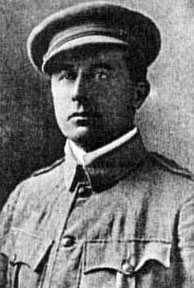
Pictured above, Lieutenant Colonel Samuel Gurney Sheppard in an undated photo. He won the DSO whilst serving with the Imperial Yeomanry during the Second South African War and died of wounds whilst leading the Hertfordshire Yeomanry at Gallipoli on the 21st August 1915.

I also offer a comprehensive, fast and cost-effective military history research service. Follow the link for more information.

27 August 2011

The Sherwood Foresters - 1st & 2nd Battalions - 1881-1914

This post will look at numbering in the two regular battalions of The Sherwood Foresters (Nottinghamshire and Derbyshire Regiment) between 1881 and 1914. The regiment was formed on 1st July 1881; the 1st Battalion from the 45th (Nottinghamshire) Regiment of Foot, and the 2nd Battalion from the 95th (Derbyshire) Regiment of Foot. The newly formed regiment was established as the county regiment for Nottinghamshire and Derbyshire and started numbering from 1 in 1881.

I have compiled the information on this post as a result of examining service records in WO 97 (online with Findmypast) and WO 363 and WO 364 (online with Ancestry). Note that Findmypast has also indexed WO 363/4 (and uncovered an additional half a million names).


In fact, there are over 43,000 Sherwood Foresters service and pension records (for this regiment - and its antecedents) in various War Office series held at the National Archives. Clicking on the link will take you to the results on Findmypast but you will need a subscription or Pay-Per-View credits to actually view the records. Some of these records can also be viewed on-line on Ancestry although Findmypast has by far the most comprehensive service record collection.


Use the regimental numbers and dates on which these were issued, below, to determine parameters for when your own Sherwood Foresters ancestor would have joined up. Note though that these numbers are only for regular enlistments. Special Reserve and Territorial Force battalions operated completely separate regimental number sequences.

10 joined on 6th July 1881
221 joined on 21st February 1882
451 joined on 2nd January 1883
726 joined on 11th January 1884
1017 joined on 7th January 1885
1363 joined on 11th February 1886
1886 joined on 24th March 1887
2229 joined on 5th January 1888
2494 joined on 15th January 1889
2749 joined on 27th February 1890
3125 joined on 8th April 1891
3469 joined on 10th January 1892
3978 joined on 16th January 1893
4624 joined on 21st March 1894
4993 joined on 15th January 1895
5358 joined on 21st February 1896
5559 joined on 16th February 1897
5784 joined on 7th January 1898
6200 joined on 7th March 1899
6519 joined on 16th February 1900

The Sherwood Foresters raised three volunteer service companies during the South African War and issued numbers as follows:

1st VSC: numbers within the range 7331 to 7553
2nd VSC: numbers within the range 7443 to 7587
3rd VSC: numbers within the range 7592 to 7619

On 23rd February 1900, the 1st VSC embarked aboard the SS Avondale Castle for South Africa. It comprised Captain Turner Lee, Lieutenant Kingdom, Lieutenant R K Ellis, Lieutenant F A C Wright and 113 men.

6808 joined on 16th January 1901

In 1902 the regiment’s name was changed to The Sherwood Foresters (Nottinghamshire & Derbyshire Regiment). Numbering was unaffected by the title change.

7310 joined on 3rd May 1902
8565 joined on 6th January 1903
9058 joined on 8th January 1904
9770 joined on 17th February 1905
9980 joined on 12th January 1906
10241 joined on 15th January 1907
10730 joined on 7th April 1908
11182 joined on 4th February 1909
11277 joined on 8th January 1910
11567 joined on 6th March 1911
11897 joined on 13th June 1912
11998 joined on 17th January 1913
12197 joined on 21st February 1914

The First World War
When Britain went to war in August 1914, men joining the new service battalions were issued with numbers from the same series in use by the two regular battalions.


Recruitment rates 1881-1911

Between 1st July 1881 and 8th April 1891, The Sherwood Foresters recruited 3,125 men, an average of 318 men each year. Of the sixty-nine infantry regiments recruiting at this time, The Sherwood Foresters was the fifty-second most successful infantry recruiter.


The pattern improved dramatically over the following decade and up until the 16th January 1901, the regiment added close to 3,700 men to its books, a high average of 378 new recruits a year and a rate which saw the regiment leap up the recruiting table to be the fourteenth most successful infantry recruiter.

The trend continued into the next decade as well and by March 1911 the regiment had issued number 11567 to its latest recruit; an average recruitment rate for the decade of 468 men; the eighth best recruitment rate for an infantry regiment in the British Isles.

Overall, the Sherwood Foresters’s recruitment rate for the period July 1881 to March 1911 was an impressive 388 men per annum; a rate which made it the thirteenth most successful infantry recruiter in the United Kingdom.

1st Battalion stations 1881-1914

1881 Chatham
1882 Athlone
1885 Kilkenny
1888 Limerick
1889 Colchester
1894 Curragh
1898 Malta
1899 South Africa
1902 Hong Kong
1904 Singapore
1906 Bangalore
1909 Secunderabad
1912 Bombay
1914 France & Flanders (from November)

2nd Battalion stations 1881-1914

1881 Aldershot
1882 Gibraltar
1882 Egypt
1882 Lucknow
1888 Sikkim
1888 Lucknow
1892 Umballa
1894 Solon
1897 Sitapore
1897 Tirah
1897 Sitapore
1898 Aden
1899 Malta
1902 Parkhurst
1904 Aldershot
1907 Kinsale
1909 Fermoy
1910 Plymouth
1913 Sheffield
1914 France & Flanders (from September)

I also offer a comprehensive, fast and cost-effective military history research service. Follow the link for more information.

19 August 2011

The Black Watch (Royal Highlanders) - 1st & 2nd Battalions


This post will look at numbering in the two regular battalions of The Black Watch between 1881 and 1914. Service records for all of the sample numbers and dates below survive in the series WO 363 and WO 364 at the National Archives (and also online at Ancestry.co.uk) and WO 97 (on line courtesy of Find My Past).

In fact, there are over 28,000 Black Watch pension and service records (for this regiment - and its antecedents) in various War Office series held at the National Archives. Clicking on the link will take you to the results on Findmypast but you will need a subscription or Pay-Per-View credits to actually view the records. Some of these records can also be viewed on-line on Ancestry although Findmypast has by far the most comprehensive service record collection.


Use the regimental numbers and dates on which these were issued, below, to determine parameters for when your own Black Watch ancestor would have joined up. Note though that these numbers are only for regular enlistments. Special Reserve and Territorial Force battalions operated completely separate regimental number sequences.

The Black Watch (Royal Highlanders) was formed on the 1st July 1881; the 1st Battalion from the 42nd (Royal Highland) Regiment of Foot (The Black Watch), and the 2nd Battalion from the 73rd (Perthshire) Regiment of Foot. The newly formed regiment was established as the county regiment for Fifeshire, Forfarshire and Perthshire. It started numbering from 1 in July 1881.

22 joined on 14th July 1881
1152 joined on 18th February 1882
2074 joined on 22nd March 1883
2222 joined on 16th January 1884
2566 joined on 8th January 1885
2852 joined on 5th January 1886
3177 joined on 2nd February 1887
3658 joined on 19th January 1888
3882 joined on 16th May 1889
4049 joined on 11th March 1890
4530 joined on 22nd April 1891
4962 joined on 28th March 1892
5290 joined on 4th July 1893
5460 joined on 8th January 1894
5916 joined on 28th January 1895
6359 joined on 25th February 1896
6642 joined on 18th March 1897
6874 joined on 13th January 1898
7226 joined on 14th March 1899
7228 joined on 27th February 1900

During the South African War the Black Watch raised three Volunteer Service Companies. Men joining the 1st VSC in January 1900 were issued numbers in continuance of the series then in use for the regular 1st and 2nd Battalions and not allowing the clear one thousand digit gap that had been stipulated in AO 29 of the 2nd January that year. Numbers in the range 7540 to 7666 were issued to these men and on the 17th February 1900, the 1st VSC comprising three officers: Captain Cook, Lieutenant Hunter and Lieutenant McArthur,and 114 men embarked aboard SS Gascon for South Africa.

Men joining the 2nd VSC were issued numbers from within a wide range of numbers which I had originally noted as within the range 8522 to 9024. More work needed here.

Men joining the 3rd VSC in January 1902 were issued numbers between 9083 and 9176.

Meanwhile, numbering of regular enlistments in the regular battalions continued apace:

8083 joined on 16th January 1901
8525 joined on 2nd January 1902
9424 joined on 13th January 1903
9735 joined on 11th January 1904
9999 enlisted on 29th September 1904

A new number series commences
Queen’s regulations for the Army, 1895 had stated: “The regimental series of numbers will commence with 1. The numbers will be given in sequence, according to the date of application. When the series approaches 9,999, application should be made to the Adjutant-General in sufficient time to obtain authority to commence a new series.” The new King’s Regulations of 1904 which permitted infantry regiments to number up to 19,999 came too late for the Black Watch which reached 9,999 in September 1904 and immediately started a new series from 1.


12 enlisted 2nd October 1904
182 joined on 20th March 1905
495 joined on 18th January 1906
876 joined on 5th April 1907
1243 joined on 30th March 1908
1580 joined on 28th January 1909
1791 joined on 4th February 1910
1955 joined on 6th January 1911
2333 joined on 10th April 1912
2560 joined on 18th August 1913
2652 joined on 20th January 1914

The First World War
When Britain went to war in August 1914, men joining the new service battalions were issued with numbers from the same series that had, up until that point, been the sole preserve of the regiment’s two regular battalions. The only difference between men enlisting for war-time service only and those enlisting as career soldiers, was that the former’s numbers were supposed to be prefixed with the letter S/.

Recruitment rates 1881-1911

Between 1st July 1881 and 22nd April 1891, The Black Watch recruited 4,530 men, a very high average of 461 men each year. Of the sixty-nine infantry regiments recruiting at this time, The Black Watch was the most successful Scottish regiment and the third most successful infantry recruiter over all.

The following decade though, was not so kind. Recruiting dipped to a yearly average of 364 men with the Black Watch recruiting nearly a thousand men less than it had done the in the 1880s. Between the 22nd April 1891 and 16th January 1901, the regiment recruited 3,553 men.

Recruitment picked up again in the early years of the twentieth century. The Black Watch added 3871 men to its books between January 1901 and January 1913 and finished the decade as the thirteenth most successful British Army infantry recruiter.

1st Battalion stations 1881-1914

1881 Edinburgh
1882 Egypt
1885 Sudan
1889 Malta
1892 Gibraltar
1893 Egypt
1893 Mauritius (half battalion)
1893 South Africa (half battalion)
1897 Subathu (entire battalion)
1899 Sitapur
1901 South Africa
1902 Edinburgh
1904 Fort George
1906 Curragh
1908 Limerick
1911 Edinburgh
1912 Aldershot
1914 France & Flanders (from August)

2nd Battalion stations 1881-1914
1881 Portsmouth

1884 Aldershot
1889 Belfast
1892 Limerick
1894 Glasgow
1897 York
1899 South Africa
1902 Umballa
1905 Solon
1906 Dalhousie
1908 Barian (northern Punjab)
1911 Calcutta
1914 Bareilly
1914 France & Flanders (from October)

The photo

I've borrowed the image on this post from the Royal Highlanders website and I hope this acknowledgement will be sufficient to permit me to re-publish it here. It shows those men of the 3rd (Dundee Highland) Volunteer Battalion who served with the 1st VSC during the 2nd South African War. The men are named as follows:


Rear (left to right) - Private J. Kelly, Private J. Gray, Private A. Greig, Bugler A. Chalmers, Private J. Duncan, and Private H. Harris.

Middle (left to right) - Lance Corporal D. Florence, Private J. Jack, Private W. Cosgrove, Private J. Cameron, Private H. Low, Lance Corporal A. Malcolm.

Front (left to right) - Corporal J. Burt, Lance Sergeant G. Brander, Sergeant J. Gegan, Lieutenant Harry Kebel Smith (Dundee), Lance Sergeant L. Bisset, Corporal W. Carnegie, Corporal W. Donaldson.

Not Shown - Private E. S. High, Private T. Sprunt, Private J. G. Sweeney, and Private D. T. Thomson.

I also offer a comprehensive, fast and cost-effective military history research service. Follow the link for more information.

http://www.naval-military-press.com/home.php?bid=6&partner=PaulNixon

Further Reading

History of the Black Watch in the Great War 1914-1918

The Black Watch (Royal Highlanders), entered the Great War with two regular, one Special Reserve battalion (the 3rd) and four Territorial Force (TF) battalions (4th to 7th). By the end of the war the total had grown to twenty-two battalions (Becke), twenty-five according to the History's foreword. Thirty thousand served in the Regiment in France, Belgium, Salonika, Palestine and Mesopotamia and of these 8,390 died. The Regiment was awarded 69 Battle Honours. Three VCs were won and a fourth was awarded to a Black Watch officer in 1917 whilst he was commanding the 1st Lincolnshire Regiment.

This three-volume history is outstanding. Vol 1 deals with the Regular and the Special Reserve battalions, Vol 2 the TF battalions and Vol 3 the New Army (Service or Kitchener) battalions. Common to all three volumes are the Preface, Foreword (by the Colonel of the Regiment) and the page listing the Regiment's Battle Honours. In each volume the battalions are treated separately and for all the front line battalions, following the narrative describing their war service there are the same six appendices: Record of Officers' Service, Summary of Casualties, Officer casualty list, Other Rank casualty list, Honours and Awards and finally the list of Actions and Operations. In Volume 1 there is a seventh appendix to the 1st and 2nd Battalion narratives - a list of Other Ranks of each battalion who were commissioned during the war. In the case of the TF the second and third line battalions, which did not leave the UK, all are dealt with together. There is a bonus in Volume 2; at the end there is a section on the Royal Highlanders of Canada represented by the 13th, 42nd and 73rd Canadian Infantry Battalions, giving a brief account of their actions with appendices showing for each battalion a summary of killed, list of Honours and Awards and list of Actions and Operations. As regimental histories go, this is as detailed as they come.

Note. Original sets of these books sell for upwards of £200 which makes these modern re-prints something of a bargain.

With a Highland Regiment in Mesopotamia (2nd Battalion)

On the outbreak of  the First World War, the 2nd Battalion, Black Watch was stationed in Bareilly, India, where it had been since the end of the Boer War. On mobilization it formed part of the Bareilly Brigade of the 7th (Meerut) Division and went to France with the Indian Corps, landing in France in October 1914. At the end of 1915 the Indian Corps was withdrawn from France and sent to Mesopotamia where the battalion arrived on the last day of 1915< Before the week was out it was in action at Shaikh Saad (6th-8th Jan 1916) where it had some 60 killed. The Official History speaks of 400 casualties in the battalion.

This account covers about 18 months, to the capture of Samarrah on 24th April 1917 when the winter campaign of 1916-17 came to an end. There are not many battalion histories dealing solely with the war in Mesopotamia (there was only one British division in that theatre, the 13th) and that makes this narrative interesting, not only from the point of view of the numerous actions in which the battalion was involved, but also because of the descriptions of the country, the inhabitants and the conditions in which they fought - the casualty lists shows disease, heat stroke and suffocation among the causes of death.

Two of the chapters consist of articles written by the CO. The full casualty roll of the other ranks is given from 1st Jan 1916 to 15th Jun 1917 with the names arranged in regimental number order, starting with 72 Sgt T.Archer. It shows the date, cause and place of death and place of burial; many of these are shown as on the battlefield with grid reference. There is also a full list of officers who served in the battalion showing in each case dates of movements such as date and place of embarkation and disembarkation, date of any casualty.

The Royal Highland Regiment, The Black Watch, Formerly 42nd and 73rd Foot, medal roll 1801-1911

This is an extremely useful resource for historians, medallists and genealogists. Here are nominal rolls of officers and men of the two regiments present at the various campaigns and battles for which medals were awarded. Prior to 1881 they were two separate regiments and the lists are shown under 42nd and 73rd Foot. In 1881 they became the 1st and 2nd Battalions of the Black Watch and are listed accordingly.

This detailed record Covers the Peninsula War and Waterloo and continues with the Kaffir Wars, Crimean War, Indian Mutiny, Gold Coast, Egypt, Suakin, Sudan and on to South Africa (1899-1902). Where there were clasps awarded for battles in a campaign the entitlement to a particular clasp is shown. A remarks/comments column provides additional information on individuals such as deaths, casualties, discharges, desertions, forfeitures. Victoria Cross awards (with citations), and those of the DSO, DCM, MSM and LSGC constitute separate lists as do awards to Volunteers and Territorials. Also included are the affiliated Royal Highlanders of Canada (5th Regiment) and the New South Wales Scottish Rifle Regiment.

2 August 2011

Surrey Yeomanry 1914-1915

Here's a small snapshot of Surrey Yeomanry numbers and joining dates between May 1914 and November 1915.

1814 joined on 18th May 1914
1856 joined on 9th August 1914
1931 joined on 3rd September 1914
2104 joined on 5th October 1914
2346 joined on 9th November 1914
2463 joined on 7th December 1914
2541 joined on 15th January 1915
2585 joined on 8th February 1915
2635 joined on 11th March 1915
2717 joined on 6th April 1915
2781 joined on 18th May 1915
2847 joined on 29th June 1915
2855 joined on 22nd July 1915
2866 joined on 2nd September 1915
2871 joined on 10th September 1915
2879 joined on 7th October 1915
2936 joined on 1st November 1915

Service records for all of the sample numbers and dates below survive in the series WO 363 and WO 364 at the National Archives and also online at Ancestry.co.uk.

I also offer a comprehensive, fast and cost-effective military history research service. Follow the link for more information.

10 July 2011

The Connaught Rangers - 1st & 2nd Battalions


This post will look at numbering in the two regular battalions of The Connaught Rangers between 1881 and 1914. Service records for all of the sample numbers and dates below survive in the series WO 363 and WO 364 at the National Archives (and also online at Ancestry.co.uk) and WO 97 (on line courtesy of Findmypast).

In fact, there are over 19,000 Connaught Rangers pension and service records (for this regiment - and its antecedents) in various War Office series held at the National Archives. Clicking on the link will take you to the results on Findmypast but you will need a subscription or Pay-Per-View credits to actually view the records. Some of these records can also be viewed on-line on Ancestry although Findmypast has by far the most comprehensive service record collection.


Use the regimental numbers and dates on which these were issued, below, to determine parameters for when your own Connaught Rangers ancestor would have joined up. Note though that these numbers are only for regular enlistments. Special Reserve and Extra Reserve battalions operated completely separate regimental number sequences.

The Connaught Rangers was formed on 1st July 1881; the 1st Battalion from the 88th (Connaught Rangers) Regiment of Foot, and the 2nd Battalion from the 94th Regiment of Foot.

The newly formed regiment was established as the county regiment for Galway, Leitrim, Mayo and Roscommon. It started numbering from 1 in 1881.

8 joined on 13th July 1881
97 joined on 19th January 1882
412 joined on 13th January 1883
713 joined on 10th April 1884
1720 joined on 1st July 1885
2076 joined on 22nd May 1886
2499 joined on 27th January 1887
2792 joined on 4th January 1888
3379 joined on 23rd January 1889
3673 joined on 15th April 1890
3950 joined on 21st March 1891
4071 joined on 17th January 1892
4441 joined on 10th January 1893
4824 joined on 7th February 1894
5251 joined on 28th January 1895
5614 joined on 8th January 1896
6031 joined on 5th April 1897
6346 joined on 9th March 1898
6733 joined on 6th September 1899
6804 joined on 10th January 1900
7092 joined on 3rd April 1901
7362 joined on 13th February 1902
7736 joined on 6th February 1903
8135 joined on 17th February 1904
8450 joined on 4th January 1905
8714 joined on 9th January 1906
9048 joined on 16th January 1907
9420 joined on 1st September 1908
9596 joined on 28th January 1909
10041 joined on 11th October 1910
10125 joined on 6th February 1911
10347 joined on 5th January 1912
10605 joined on 14th January 1913
10860 joined on 3rd February 1914

The First World War
As well as its two regular battalions, The Connaught Rangers had, since 1908, had a Special Reserve Battalion (the 3rd Battalion) and an Extra Reserve Battalion (the 4th Battalion). These two battalions were the natural heirs of the 4th and 5th Militia Battalions, respectively. The 3rd (Militia) Battalion was one of twenty-three infantry militia battalions which had not been converted into a Special Reserve or Extra Reserve battalion when the militia was disbanded in 1908. Two service battalions, the 5th and 6th Battalions, were added during WW1 and each had its own number series prefixed by the battalion number. Men joining the regular battalions during the First World War were issued with numbers in continuation of the series outlined above. The Connaught Rangers, in common with all Irish regiments, had no Territorial Force battalions.


Recruitment rates 1881-1911
Between 1st July 1881 and 21st March 1891, The Connaught Rangers recruited 3,950 men, a high average of 405 soldiers a year and one which placed the regiment in the top ten infantry recruiters for the decade. It was also to be the regiment’s most successful recruiting period.

Recruitment in the 1890s tailed off dramatically, the regiment adding just over 3100 men between March 1891 and April 1901. It would be a similar picture in the next decade too.

On average, The Connaught Rangers had recruited 312 men per annum between March 1891 and April 1901 and this average would fall again to 308 per annum in the period to February 1911. In terms of recruitment, by 1911 The Connaught Rangers ranked fifty-second out of sixty-nine.

In total, between 1st July 1881 and 27th June 1911, The Connaught Rangers recruited 10,125 men.

1st Battalion stations 1881-1914
1881 Bengal
1885 Jullunder
1890 Aden
1891 Portsmouth
1894 Sheffield
1897 Athlone
1899 South Africa
1903 Mullingar
1907 Malta
1908 Dagshai
1910 Ferozepore
1914 France & Flanders (from October)

2nd Battalion stations 1881-1914

1881 South Africa
1882 Fermoy
1885 Templemore
1887 Portsmouth
1889 Aldershot
1889 Malta
1892 Cyprus
1895 Egypt
1896 Sudan
1897 Meerut
1903 Ahmednagar
1906 Poona
1908 Tipperary
1910 Curragh
1913 Aldershot
1914 France & Flanders (from August)

I also offer a comprehensive, fast and cost-effective military history research service. Follow the link for more information.

20 June 2011

Worcestershire Regiment - regular battalions - 1881-1914


This post will look at numbering in the regular battalions of the Worcestershire Regiment between 1881 and 1914. Service records for all of the sample numbers and dates below survive in the series WO 363 and WO 364 at the National Archives (and also online at Ancestry.co.uk) and WO 97 (on line courtesy of Find My Past).

In fact, there are over 43,000 Worcestershire Regiment pension and service records (for this regiment - and its antecedents) in various War Office series held at the National Archives. Clicking on the link will take you to the results on Findmypast but you will need a subscription or Pay-Per-View credits to actually view the records. Some of these records can also be viewed on-line on Ancestry although Findmypast has by far the most comprehensive service record collection.


Use the regimental numbers and dates on which these were issued, below, to determine parameters for when your own Worcestershire Regiment ancestor would have joined up. Note though that these numbers are only for regular enlistments. Special Reserve and Territorial Force battalions operated completely separate regimental number sequences.

The Worcestershire Regiment was formed on the 1st July 1881; the 1st Battalion from the 29th (Worcestershire) Regiment of Foot, and the 2nd Battalion from the 36th (Herefordshire) Regiment of Foot. The newly formed regiment was established as the county regiment for Worcestershire and started numbering from 1 in 1881.

23 joined on 10th September 1881
146 joined on 30th January 1882
370 joined on 28th March 1883
924 joined on 16th September 1884
1119 joined on 16th March 1885
1960 joined on 24th November 1886
2044 joined on 26th January 1887
2268 joined on 3rd December 1888
2494 joined on 30th July 1889
2665 joined on 26th March 1890
2991 joined on 24th August 1891
3225 joined on 13th April 1892
3597 joined on 3rd February 1893
4020 joined on 13th March 1894
4358 joined on 10th June 1895
4640 joined on 15th July 1896
4750 joined on 12th January 1897
5123 joined on 1st February 1898
5460 joined on 5th January 1899
5678 joined on 1st January 1900

The Second South African War 1899-1902

The Worcestershire Regiment raised two more regular battalions, the 3rd and 4th Battalions, in 1900. The 3rd Battalion was raised on the 14th February and the 4th Battalion on the 10th March. Men joining these battalions were numbered from the same series being used for the 1st and 2nd Battalions. The regiment maintained its additional two battalions after the war with South Africa had ended and thus went to war with Germany in 1914 with four regular battalions.


Volunteer Service Companies
During the South African War, the 7th and 8th Volunteer Battalions supplied enough men to enable the regiment to raise two volunteer service companies (VSCs). One hundred and thirty of these men came from the 8th Volunteer Battalion. Numbers were allocated to VSC recruits as follows:


1st VSC: numbers within the range 6693 to 6855
2nd VSC: numbers within the range 6808 to 6878

... back to the numbering:
6383 joined on 3rd June 1901

6656 joined on 13th January 1902
7445 joined on 2nd January 1903
8196 joined on 29th January 1904
9259 joined on 27th May 1905
9813 joined on 21st February 1906
10335 joined on 9th January 1907
11042 joined on 17th February 1908
11586 joined on 5th January 1909
12064 joined on 8th January 1910
12458 joined on 31st May 1911
12887 joined on 27th January 1912
13285 joined on 11th February 1913
13476 joined on 19th March 1914

The First World War
When Britain went to war in August 1914, men joining the new service battalions were issued with numbers from the same series in use by the four regular battalions.


Recruitment rates 1881-1911
Recruiting in the Worcestershire Regiment was a slow and often tedious affair in the 1880s. Between 1st July 1881 and 24th August 1891, the regiment recruited just 2991 men, an annual average of 294 men per annum. This however, was to be the regiment’s worst showing and its fortunes would improve dramatically over the next twenty years.

Between 1891 and 1901 the regiment recruited close to 3,400 men, improving its recruitment rate for the decade to an average of 345 men per annum, and finishing in twenty-sixth place.

The addition of two more regular battalions in 1900 had a marked effect on recruitment rates and between June 1901 and May 1911, the regiment added over 6000 men to its books; an annual recruitment rate of 613 men per annum for the last ten years and one which saw recruiting in the regiment surpassed only by The King’s Royal Rifle Corps and Middlesex Regiment.

Overall, after a slow start in the 1880s, the Worcestershire Regiment finished as the sixth most successful recruiter of British Army infantry between 1881 and 1911.

1st Battalion stations 1881-1914
1881 Bombay

1885 Karachi
1888 Quetta
1891 Poona
1893 Kemptee
1894 Burma
1895 Aden
1896 Devonport
1899 Guernsey
1900 South Africa
1903 Templemore
1906 Dublin
1908 Parkhurst
1913 Egypt
1914 France & Flanders (from November)

2nd Battalion stations 1881-1914
1881 Kinsale
1885 Jersey
1888 Pembroke Dock
1890 Curragh
1895 Malta
1897 Bermuda
1899 Halifax (Nova Scotia)
1900 South Africa
1904 Ceylon
1906 Ahmednagar
1909 Jhansi
1913 Aldershot
1914 France & Flanders (from August)

3rd Battalion stations 1900-1914

1900 Raised in Ireland on the 14th February
1900 Tipperary
1904 Aldershot
1907 South Africa
1908 Tidworth
1914 France & Flanders (from August)

4th Battalion stations 1900-1915

1900 Raised in Ireland on the 10th March
1903 Bermuda
1905 Malta
1909 Bareilly
1914 Burma
1915 Gallipoli (from April)

I also offer a comprehensive, fast and cost-effective military history research service. Follow the link for more information.

Further reading:
Try the excellent
Worcestershire Regiment website which, amongst other things, carries a complete roll of honour for Worcestershire Regiment men between 1808 and 1960!

I've borrowed the image on this post from the Worcester City Museums website. According to the caption, it shows a sergeant and a private in 1897.


The Naval & Military Press has re-published The Worcestershire Regiment in The Great War (above) and writes:

"Arguably the finest regimental history even written. A magnificent publication it is with its profusion of maps, illustrations and photos - each page of photos contains several. The Worcesters was one of the five regiments that had four regular battalions before the war, with two special reserve and two territorial battalions. By the end of the war another fourteen battalions had been raised for a total of twenty-two of which twelve went on active service. 9,460 officers and men gave their lives, 71 Battle Honours were awarded and eight VCs one of whom, attached to the RFC, was the airman Leefe Robinson, famous for shooting down a zeppelin. Battalions served on the Western Front, in Gallipoli, Macedonia, Mesopotamia, Italy; one battalion ended the war in North Persia. Appendices provide the Roll of Honour; Honours and Awards including Mention in Despatches, with date of Gazette (for ‘Companion' of the British Empire read ‘Commander'); details of Badges, Colours and Distinctions of the regiment; and the music for regimental marches. Illustrations are by well-known artists depicting battle scenes including each VC-winning action - apart from Leefe's zeppelin. After considering various factors, explained in his very informative preface, the author decided to present this history as one general story in which the number of the battalion concerned is printed in the margin of the pages dealing with its deeds. Attention is paid to minor actions such as trench raids, which usually find no place in compressed official histories; they are recorded in this history. The plans illustrate the engagements recorded in the book, and are designed to depict the part played by the several battalions in their battles and to enable the visitor to the battlefields to recognise the ground on which each fight took place, as much as to make clear the general course of those actions. The book opens with a very interesting account of the regiment in the years before the war, beginning at the turn of the century, and there is a very comprehensive index of 25 pages. This is a great piece of work and must rank as one of the finest of the Great War regimental histories, many would say the finest, and I wouldn't argue." Order it HERE.

Grab a book bargain - 1000s of titles