Showing posts with label regimental number series. Show all posts

23 September 2022

9th (Highlanders) Royal Scots


Neill Gilhooley alerts me to some terrific research he has undertaken into the 9th Royal Scots. The fruits of his considerable labours can be viewed by clicking on the link above.

The photo, source unknown, shows men of the 9th Royal Scots at their annual camp, on this occasion at Aberdour, in 1909.

9 August 2022

Royal Munster Fusiliers - 5th (Extra Reserve) Battalion

This post will look at regimental numbering in the 5th (Extra Reserve) Battalion of the Royal Munster Fusiliers between 1908 and 1914. The Special Reserve and the Extra Reserve were the natural heirs to the militia battalions which, for the most part, they replaced in 1908. My 2009 article on the Creation of the Special Reserve in 1908 may be helpful here.

The Royal Munster Fusiliers had three militia battalions (the 3rd, 4th and 5th Battalions) and these survived in all but name when the Special Reserve was introduced in 1908. Men who were then serving with the 3rd (Militia) Battalion, were asked if they wanted to continue to serve with the newly formed 3rd (Special Reserve) Battalion, and men who were then serving with the 4th and 5th (Militia) Battalions, were asked if they wanted to continue to serve with the newly formed 4th & 5th (Extra Reserve) Battalions. 

Men joining the militia and special/extra reserve were not career soldiers. The Army Book for the British Empire, published in 1893 provided a useful overview of the militia when it noted:

"Its object is to maintain in the United Kingdom a trained body of men available "in case of imminent national danger or great emergency" to supplement the regular army in the defence of the country.

"It offers military service to the class of men willing to give it for a month in the year for training of for the term of their engagement on emergency, but whose avocations do not lead them to become either regular soldiers or volunteers."

Most 1914 Star rolls show plenty of evidence of Special Reserve and Extra Reserve men who served alongside career soldiers. Sometimes their numbers are prefixed by the number of their battalion - typically a 3/ or 4/ in most line infantry regiments - but just as often there will be no prefix.

In 1908 the regular battalions were numbering in the 8000 range whereas the 5th Battalion, picking up the old militia numbering sequence, was numbering in the 5000s. When these 4th Battalion men were called up as drafts for the regular 1st and 2nd Battalions from August 1914, they retained their original 5th Battalion regimental numbers.

Here are some sample regimental numbers and joining dates for the 5th Royal Munster Fusiliers. Use this information to estimate when a man would have joined this battalion.

5319 joined on the 28th December 1908

5357 joined on the 28th February 1909

5529 joined on the 16th May 1910

5629 joined on the 17th February 1911

5845 joined on the 7th November 1912

5994 joined on the 12th December 1913

6031 joined on the 14th April 1914

6119 joined on the 18th August 1914

6216 joined on the 15th September 1914

Do also read of some of the articles towards the bottom of the Army Service Numbers 1881-1918 index

Royal Munster Fusiliers - 4th (Extra Reserve) Battalion

This post will look at regimental numbering in the 4th (Extra Reserve) Battalion of the Royal Munster Fusiliers between 1908 and 1914. The Special Reserve and the Extra Reserve were the natural heirs to the militia battalions which, for the most part, they replaced in 1908. My 2009 article on the Creation of the Special Reserve in 1908 may be helpful here.

The Royal Munster Fusiliers had three militia battalions (the 3rd, 4th and 5th battalions) and these survived in all but name when the Special Reserve was introduced in 1908. Men who were then serving with the 3rd (Militia) Battalion, were asked if they wanted to continue to serve with the newly formed 3rd (Special Reserve) Battalion, and men who were then serving with the 4th and 5th (Militia) Battalions, were asked if they wanted to continue to serve with the newly formed 4th & 5th (Extra Reserve) Battalions. 

Men joining the militia and special/extra reserve were not career soldiers. The Army Book for the British Empire, published in 1893 provided a useful overview of the militia when it noted:

"Its object is to maintain in the United Kingdom a trained body of men available "in case of imminent national danger or great emergency" to supplement the regular army in the defence of the country.

"It offers military service to the class of men willing to give it for a month in the year for training of for the term of their engagement on emergency, but whose avocations do not lead them to become either regular soldiers or volunteers."

Most 1914 Star rolls show plenty of evidence of Special Reserve and Extra Reserve men who served alongside career soldiers. Sometimes their numbers are prefixed by the number of their battalion - typically a 3/ or 4/ in most line infantry regiments - but just as often there will be no prefix.

In 1908 the regular battalions were numbering in the 8000 range whereas the 4th Battalion, picking up the old militia numbering sequence, was numbering in the 4000s. When these 4th Battalion men were called up as drafts for the regular 1st and 2nd Battalions from August 1914, they retained their original 4th Battalion regimental numbers.

Here are some sample regimental numbers and joining dates for the 4th Royal Munster Fusiliers. Use this information to estimate when a man would have joined this battalion.

2876 (a former militia man) joined on the 2nd August 1908

6160 joined on the 27th June 1910

6297 joined on the 25th November 1911

6607 joined on the 16th March 1912

6917 joined on the 26th May 1913

7268 joined on the 17th July 1914

7325 joined on the 8th August 1914

7481 Joined on the 10th September 1914

7587 joined on the 15th October 1914

Do also read of some of the articles towards the bottom of the Army Service Numbers 1881-1918 index

Royal Munster Fusiliers - 3rd (Special Reserve) Battalion

This post will look at regimental numbering in the 3rd (Special Reserve) Battalion of the Royal Munster Fusiliers between 1908 and 1914. The Special Reserve and the Extra Reserve were the natural heirs to the militia battalions which, for the most part, they replaced in 1908. My 2009 article on the Creation of the Special Reserve in 1908 may be helpful here.

The Royal Munster Fusiliers had three militia battalions (the 3rd, 4th and 5th battalions) and these survived in all but name when the Special Reserve was introduced in 1908. Men who were then serving with the 3rd (Militia) Battalion, were asked if they wanted to continue to serve with the newly formed 3rd (Special Reserve) Battalion, and men who were then serving with the 4th and 5th (Militia) Battalions, were asked if they wanted to continue to serve with the newly formed 4th & 5th (Extra Reserve) Battalions. 

Men joining the militia and special/extra reserve were not career soldiers. The Army Book for the British Empire, published in 1893 provided a useful overview of the militia when it noted:

"Its object is to maintain in the United Kingdom a trained body of men available "in case of imminent national danger or great emergency" to supplement the regular army in the defence of the country.

"It offers military service to the class of men willing to give it for a month in the year for training of for the term of their engagement on emergency, but whose avocations do not lead them to become either regular soldiers or volunteers."

Most 1914 Star rolls show plenty of evidence of Special Reserve and Extra Reserve men who served alongside career soldiers. Sometimes their numbers are prefixed by the number of their battalion - typically a 3/ or 4/ in most line infantry regiments - but just as often there will be no prefix.

In 1908 the regular battalions were numbering in the 8000 range whereas the 3rd Battalion, picking up the old militia numbering sequence, was numbering in the 3000s. When these 3rd Battalion men were called up as drafts for the regular 1st and 2nd Battalions from August 1914, they retained their original 3rd Battalion regimental numbers.

Here are some sample regimental numbers and joining dates for the 3rd Royal Munster Fusiliers. Use this information to estimate when a man would have joined this battalion.

3766 had originally joined the militia in January 1908 and retained this number from April 1908.

3867 joined on the 6th January 1909

4159 joined on the 13th April 1910

4256 joined on the 8th April 1911

4352 joined on the 7th February 1912

4462 joined on the 8th February 1913

4564 joined on the 8th August 1914

Do also read of some of the articles towards the bottom of the Army Service Numbers 1881-1918 index


24 October 2021

West Yorkshire Regiment - 4th (Extra Reserve) Battalion

West Yorkshire Regiment colours

This post will look at regimental numbering in the 4th (Extra Reserve) Battalion of the West Yorkshire Regiment between 1908 and 1914. T
he Special Reserve and the Extra Reserve were the natural heirs to the militia battalions which, for the most part they replaced in 1908. My 2009 article on the Creation of the Special Reserve in 1908 may be helpful here.

Both West Yorkshire Regiment militia battalions survived in all but name when the Special Reserve was created in 1908. Men who were then serving with the 3rd (Militia) Battalion, were asked if they wanted to continue to serve with the newly formed 3rd (Special Reserve) Battalion, and men who were then serving with the 4th (Militia) Battalion, were asked if they wanted to contunue to serve with the newly formed 4th (Extra Reserve) Battalion. 

Men joining the militia and special/extra reserve were not career soldiers. The Army Book for the British Empire, published in 1893 provided a useful summary of the militia when it noted:

"Its object is to maintain in the United Kingdom a trained body of men available "in case of imminent national danger or great emergency" to supplement the regular army in the defence of the country.

"It offers military service to the class of men willing to give it for a month in the year for training of for the term of their engagement on emergency, but whose avocations do not lead them to become either regular soldiers or volunteers."

Most 1914 Star rolls show plenty of evidence of Special Reserve and Extra Reserve men who served alongside career soldiers. Sometimes their numbers are prefixed by the number of their battalion - typically a 3/ or 4/ in most line infantry regiments - but just as often there will be no prefix.

Confusingly, for those with an interest in West Yorkshire Regiment regimental numbers, the series used by the 4th Battalion pretty much kept pace with the series used by the 3rd Battalion, but both were distinct series and that is important to remember. Also important to note is that when these men were called up as drafts for the regular 1st and 2nd Battalions from August 1914, they retained their original 3rd and 4th Battalion regimental numbers.

Here are some sample regimental numbers and joining dates for the 4th (Extra Reserve) Battalion, West Yorkshire Regiment:

5727 joined on 27th June1908, but this number had originally been issued to this man when he joined the 4th (Militia) Bn in 1903
6886 joined on 1st June 1909
7322 joined on 31st January 1910
7411 joined on 16th February 1911
7656 joined on 2nd May 1912
7845 joined on 26th February 1913
8067 joined on 25th February 1914
8277 joined on 5th August 1914

Do also read of some of the articles towards the bottom of the Army Service Numbers 1881-1918 index
Remember. I research soldiers!

To search for West Yorkshire Regiment photos, check my British Army Ancestors website 

5 April 2021

Cheshire Regiment - 7th Battalion (TF) - 1908-1914


This post will look at regimental numbering in the 7th Battalion, Cheshire Regiment between 1908 and 1914.

The 7th Battalion was formed on the 1st April 1908, taking in men from the former 5th Volunteer Battalion. The Territorial Year Book for 1909 recorded that the battalion strength was 20 officers and 677 men. The battalion had firing ranges at Congleton, Macclesfield and Nantwich, and Sergeant G Barton was the best shot of the battalion. At the annual camp at Abergavenny in 1908, 203 officers and men attended for eight days whilst 642 officers and men attended for 15 days.

The following year, The Territorial Year Book for 1910 recorded that the strength was 28 officers and 974 men. At the annual camp at Conway in 1909, 173 officers and men had attended for 8 days whilst 818 officers and men had attended for 15 days.

having been headquartered at Congleton in 1908 and 1909, by 1914 the battalion's HQ had re-located to Macclesfield, and the battalion's eight companies drew men from the following areas.

A Company: Congleton
B Company: Congleton, with a drill statioin at Bollington
C & D Companies: Macclesfield
E Company: Winsford
F Company: Nantwich, with a drill station at Crewe
G Company: Sandbach
H Company: Wilmslow

The battalion formed part of the Cheshire Infantry Brigade in the Welsh Division.

Understanding the company distribution is important if you know where your 7th Battalion soldier lived as it would likely suggest the company he served with. For instance, men living in Sandbach and wishing to join this battalion would have logically been assigned to H Company. (Note that such logic was abandoned after 4th August 1914).

Here are some sample regimental numbers and joining dates for the 7th Battalion, Cheshire Regiment.

34 joined on the 7th April 1908
1133 joined on the 31st March 1909
1232 joined on the 2nd December 1910
1251 joined on the 5th January 1911
1466 joined on the 30th May 1912
1573 joined on the 27th January1913
1888 joined on the 17th March 1914
2018 joined on the 6th August 1914

Use these regimental numbers to approximate when a man would have joined this battalion between 1908 and August 1914. For example if your man's number was 1234 he would have joined the battalion between December 1910 and January 1911. 

The photo on this post was originally published in The Tatler on the 20th October 1915 and shows officers of the 2/5th Battalion, Cheshire Regiment.

Cheshire Regiment - 6th Battalion (TF) - 1908-1914


This post will look at regimental numbering in the 6th Battalion, Cheshire Regiment between 1908 and 1914.

The 6th Battalion was formed on the 1st April 1908, taking in men from the former 4th Volunteer Battalion. The Territorial Year Book for 1909 recorded that the battalion strength was 35 officers and 652 men. The battalion had a firing range at Coombes Moss, 16 miles from its HQ at The Armoury, Stockport and Sergeant L Darwent was the best shot of the battalion. At the annual camp in 1908, 221 officers and men attended for eight days whilst 372 officers and men attended for 15 days.

The following year, the The Territorial Year Book for 1910 recorded that the strength was 35 officers and 845 men. At the annual camp at Conway in 1909, 192 officers and men had attended for 8 days whilst 590 officers and men had attended for 15 days. Brigade camp in 1910 was scheduled for Aberystwyth from the 15th May.

By 1914 the battalion was still headquartered at Stockport, and the battalion's eight companies drew men from the following areas.

A & B Companies: Stalybridge
C Company: Hyde
D Company: Glossop, with a drill station at Hadfield
E, F, G & H Companies: Stockport

The battalion formed part of the Cheshire Infantry Brigade in the Welsh Division.

Understanding the company distribution is important if you know where your 6th Battalion soldier lived as it would likely suggest the company he served with. For instance, men living in Hyde and wishing to join this battalion would have logically been assigned to C Company. (Note that such logic was largely abandoned after 4th August 1914).

Here are some sample regimental numbers and joining dates for the 6th Battalion, Cheshire Regiment.

310 joined on the 14th April 1908
658 joined on the  23rd February 1909
919 joined on the 9th February 1910
1124 joined on the 5th December 1911
1171 joined on the 25th January 1912
1318 joined on the 21st January 1913
1609 joined on the 25th February 1914
2545 joined on the 29th September 1914

Use these regimental numbers to approximate when a man would have joined this battalion between 1908 and September 1914. For example if your man's number was 1234 he would have joined the battalion between January 1912 and January 1913.

6 March 2021

Cameronians (Scottish Rifles) - 6th Battalion (TF) - 1908-1914


This is my final post on the Territorial Force battalions of the Cameronians (Scottish Rifles) and this one will focus on the 6th Battalion. This was the only one of the four Territorial Force battalions to be headquartered outside Glasgow and it was administered by the Lanarkshire County Association whereas the other three battalions were all administered by the City of Glasgow Association. In this post I will look at regimental numbering in the 6th Battalion (TF), The Cameronians (Scottish Rifles) between 1908 and 1914.

The 6th Battalion was formed on the 1st April 1908 and prior to this had been the 2nd Volunteer Battalion, Scottish Rifles. The Territorial Year Book for 1909 recorded that the battalion strength was 25 officers and 722 men. 352 men attended camp in 1908 for 8 days, with eight 300 men attending for 15 days.

The following year, The Territorial Year Book for 1910 recorded that the strength was 25 officers and 957 men and at the annual camp at Troon in 1909, 363 officers and men had attended for eight days whilst 589 officers and men had attended for 15 days. Colour-Sergeant T Lavin was the best shot of the unit. Camp in 1910 was scheduled from the 16th July at Denny.

The battalion was headquartered at Muirhall, Hamilton drew its recruits from the following areas:

A Company: Muirhall, Hamilton
B Company: Muirhall, Hamilton
C Company: Uddingston
D Company: Larkhall, with a drill station at Strathaven
E Company: Bothwell, with a drill station at Palace Colliery
F Company: Blantyre
G Company: Motherwell
H Company: Motherwell

The battalion formed part of the Scottish Rifle Brigade with the Lowland Division.

Here are some sample regimental numbers and joining dates for the the 6th Battalion (TF), The Cameronians (Scottish Rifles). The battalion started a new number series beginning at 1 on the 1st April 1908.

3 joined on the 1st April 1908
798 joined on the 26th February 1909
1144 joined on the 8th March 1910
1326 joined on the 9th February 1911
1610 joined on the 15th April 1912
1707 joined on the 4th April 1913
1975 joined on the 26th March 1914
2180 joined on the 7th August 1914

Use the regimental numbers above to estimate when a man would have joined this battalion between 1908 and August 1914. For example if your man's number was 1500 he would have joined the battalion between February 1911 and April 1912. Furthermore, if he came from Motherwell, he probably served in G or H Company. 

The photograph on this post shows officers of the 1/6th Battalion. It was published in The Tatler on the 28th April 1915.

You may find these related posts of interest:


Remember. I research soldiers!

To search for photos of your Scottish Rifles ancestors, check my British Army Ancestors website.

24 December 2020

East Yorkshire Regiment - 5th (Cyclist) Bn (TF)

This post will look at numbering in the 4th (Territorial Force) Battalion of the East Yorkshire Regiment between 1908 and 1914. Information on this post has been compiled as a result of looking at service records in the WO 363 and WO 364 series at the National Archives; now also widely available online from various providers.

The 5th East Yorkshire Regiment had no Volunteer Force predecessor although it got off to a flying start in April 1908 when 90 NCOs and men who had formerly served with the Cyclist Company of the 1st Volunteer Battalion signed up to the newly formed 5th (Cyclist) Battalion. The newly formed 5th Battalion, which was headquartered at Park Street, Hull commenced a new number series from 1 in April 1908 and drew its men from the following areas:

A, B, C & D Companies: Hull
E Company: Howden, with drill stations at North Cave and Staddlethorpe
F Company: Beverley, with drill stations at Hessle, Market Weighton and Pocklington
G Company: Bridlington, with drill stations Driffield, Hunmanby and Filey
H Company: Hornsea, with drill stations at Hedon and Withernsea

The battalion was attached to Northern Command.

440 joined on 16th November 1908
468 joined on 1st March 1909
618 joined on 23rd August 1910
633 joined on 23rd January 1911
704 joined on 18th March 1912
836 joined on 27th May 1913
882 joined on 2nd January 1914
1042 joined on 17th August 1914

Use the regimental numbers above to estimate when a man would have joined this battalion between 1908 and August 1914. For example, if your man had the number 800 and lived in Hull, he would probably have joined the battalion in 1913 and would have served with one of the Hull companies (A to D). 

Remember. I research soldiers! Drop me a line if you need help 

To search for photos of your East Yorkshire Regiment ancestors, check my British Army Ancestors website.


7 November 2020

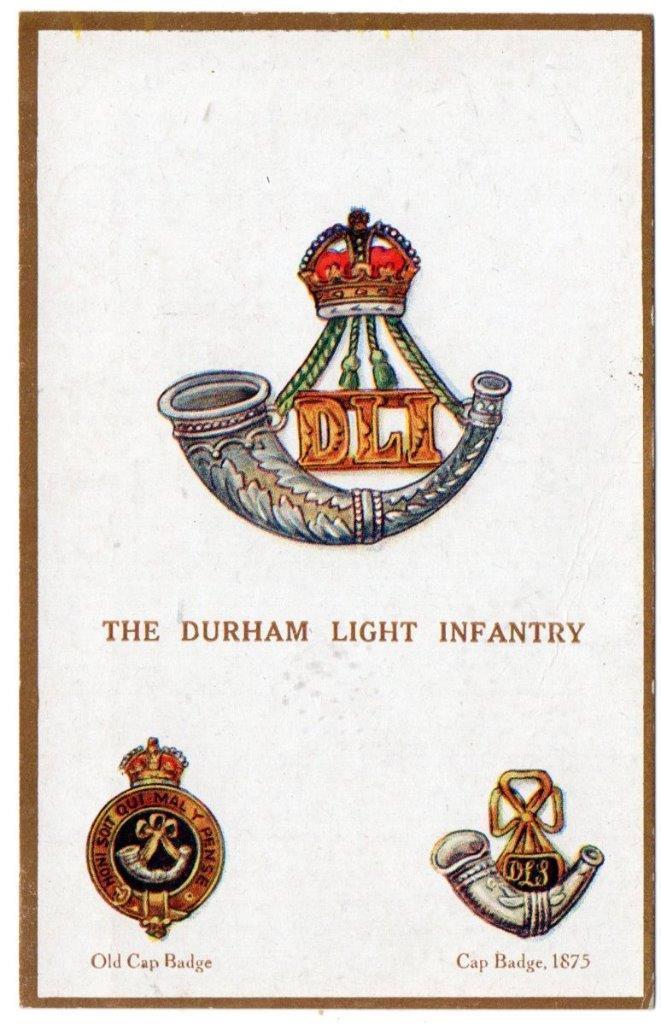
Durham Light Infantry - 6th Bn (TF)


This post will look at regimental numbering in the 6th (Territorial Force) Battalion, Durham Light Infantry between 1908 and 1914. Use the information below to estimate when your ancestor joined this particular battalion. Note that all Territorial Force battalions had their own unique number series (and for that matter, some operated more than one number series). So if your ancestor served in the 7th Battalion, Durham Light Infantry, this post won't be for you. Nothing to see here, move along...

The 6th Durham Light Infantry was headquartered at Bishop Auckland and its eight companies drew men from the following locations:

A Company: Bishop Auckland, with a drill station at Coundon; B CompanyBishop Auckland with a drill station at West Auckland; C Company: Spennymore; D Company: Crook, with a drill station at Willington; E Company: Stanhope, with drill stations at Rookhope and Wolsingham; F Company: Barnard Castle, with a drill station at Staindrop; G & H Companies drew men from Consett. The battalion was part of the Durham Light Infantry Brigade in the Northumbrian Division.

Here are some sample regimental numbers for the 6th Durham Light Infantry. These were issued sequentially, beginning at No 1 on the 1st April 1908. The vast majority of early recruits would have been men who were serving with the 2nd Volunteer Battalion.

192 joined on the 7th April 1908
1005 joined on the 30th March 1909
1161 joined on the 21st February 1910
1317 joined on the 26th January 1911
1531 joined on the 29th March 1912
1786 joined on the 8th February 1913
2003 joined on the 2nd March 1914
2238 joined on the 7th August 1914 

Use the regimental numbers above to estimate when a man would have joined this battalion between 1908 and August 1914. For example, if your man had the number 1500 and came from Crook, he would have joined in the first quarter of 1912 and would have probably served in D Company. 

Remember. I research soldiers! Drop me a line if you need help 

To search for photos of your Durham Light Infantry ancestors, check my British Army Ancestors website.

27 October 2020

Royal Warwickshire Regiment - 7th Bn (TF)


This post will look at regimental numbering in the 7th (TF) Battalion, Royal Warwickshire Regiment between 1908 and 1914. 

The 7th Battalion was a Territorial Force unit which had been formed out of the old 2nd Volunteer Battalion. In 1908, as The Territorial Year Book for 1909 records, the 7th Battalion strength comprised 24 officers and 808 men. The following year, The Territorial Year Book for 1910 recorded that the strength of the 7th Battalion had risen to 23 officers and 980 men. 

The battalion was headquartered at Coventry, and A, B, C & D Companies all drew their recruits from Coventry. E Company recruited in Rugby, F Company recruited in Leamington, G Company recruited in Warwick (and had a drill station at Kenilworth), and H Company recruited in Nuneaton. Pre 1914-1918 the battalion formed part of the Warwickshire Infantry Brigade in the South Midland Division. Here are some sample regimental numbers and joining dates for the the 7th Battalion, Royal Warwickshire Regiment:

935 joined on the 6th April 1908
1106 joined on the 1st March 1909
1280 joined on the 18th July 1910
1325 joined on the 8th February 1911
1484 joined on the 26th February 1912
1756 joined on the 14th March 1913
2110 joined on the 18th February 1914
2678 joined on the 5th September 1914 

Use the regimental numbers above to estimate when a man would have joined this battalion between 1908 and August 1914. For example, if your man had the number 1500 and came from Coventry, he would have joined in, approximately, March 1913 and would have served in A, B, C or D Company. 

Remember. I research soldiers! Drop me a line if you need help 

To search for photos of your Royal Warwickshire Regiment ancestors, check my British Army Ancestors website.

16 May 2020

Durham Light Infantry - 3rd (Special Reserve) Battalion - 1908-1914


In my blog post today I will look at numbering in the 3rd Battalion, Durham Light Infantry between 1908 and 1914.

The 3rd (Special Reserve) Battalion was the natural heir to the 3rd Militia Battalion which it replaced in 1908, and many of the men enlisting with the 3rd Special Reserve Battalion in 1908 were former militia men from the 3rd and 4th militia battalions who joined the new special reserve battalion but retained their old militia numbers. There are numerous examples of this in 1908 and a note on my spreadsheet for this battalion reads,

"Looks as though all men with prior service went into the 3rd (Special Reserve) Battalion, whilst men with no previous service went into the 4th (Extra Reserve) Battalion. Numbering for new recruits in this battalion starts where numbering in the 4th (Militia) Battalion finished."

As an example of the militia / special reserve cross-over, see 7493 Joseph William Barker who has papers in WO 363 which show that he originally enlisted with the 3rd (Militia) Battalion on the 12th April 1907. The same number 7493 appears again on his special reserve attestation paper when he joined the 3rd (Special Reserve) Battalion on the 26th July 1908.

The lowest/earliest number I have for 3rd (Special Reserve) men is 6319 William Potts who would have originally joined the 3rd (Militia) Battalion in early 1904 and who re-enlisted with the special reserve with his same number on the 26th July 1908. Note though, that the man with the number 7246, George King, had actually joined before William. He was a former 4th (Militia) Battalion man. For all of these militia men and for the regiment, there would have been nothing unusual about this. The men would have originally signed up for six years' service with the militia and they were simply continuing their service with the newly formed special reserve. 

As noted above, men with former service in the 4th (Militia) Battalion also joined the 3rd (Special Reserve) Battalion and these men also retained their old 4th (Militia) Battalion numbers. And so when you look at regimental numbers for the 3rd Battalion in 1908 you have a combination of old 3rd Battalion numbers, old 4th Battalion numbers, and new numbers issued to men who had no prior service with the militia.  This from my notes on men who joined the 3rd Battalion in 1908:

6319 William Potts, 3rd Militia Bn
6743 Alfred Campbell, 3rd Militia Bn (attest date not shown)
6912 Ralph Gibson, 3rd Militia Bn
7026 Thomas Joyce, 3rd Militia Bn
7109 Watson Mills, 3rd Militia Bn
7246 George King, 4th Militia Bn att 06/11/1902
7373 George Davidson, 3rd Militia Bn
7417 John Golden, 3rd Militia Bn
7493 Joseph William Barker, 3rd Militia Bn
7693 James Garvey, no prior service
7771 Michael Gaffney, Time Ex 3rd Militia Bn
7790 Joseph Douglass, no prior service
7803 James Tuck, time-expired 3rd Militia Bn
8226 Elijah Brown, formerly 8226 4th Militia Bn
8580 William Baxter, formerly 8580 4th Militia Bn
8967 Frank Deary, formerly 8967 4th Militia Bn
9170 John Sawyer, formerly 156 7th DLI
9264 Patrick Donnelly, No prior service
9279 Ralph Hutton
9302 Michael McMahon
9355 William Barnfield, No prior service

9371 John McDonell

Both the 3rd and the 4th Militia Battalions had maintained completely separate regimental number series in the years to 1908 and both would continue to operate separate regimental number series from 1908 as the 3rd (Special Reserve) and 4th (Extra Reserve) Battalions.

Some regimental numbers and enlistment dates for the period 1908 to 1914:

7790 Joseph Douglass (above), joined 26th May 1908

There appear to have been very few attestations in 1909 and I am guessing that this was because the battalion had reached its establishment; hardly surprising if it was taking in men from two former militia battalions.

9394 Joseph Rutley joined 19th December 1910
9474 John Atcheson joined on 9th October 1911
9533 Edward Armstrong joined on 27th January 1912
9685 Wilfred Clarke joined on the 17th February 1913
3/9775 Joseph Fraser joined on the 17th April 1914
10186 George Aberdeen joined on the 27th August 1914

Remember. I research soldiers!

To search for Durham Light Infantry photos, check my British Army Ancestors websiteImage source used on this blog post is unknown.

17 February 2018

1911 census revelations


Some while ago I wrote a post called Unpicking the 1911 census in which I demonstrated how men of the 2nd Battalion, Leicestershire Regiment had been enumerated. I continue to unpick the 1911 census myself and have set myself the task this year of completing a full transcription of all men serving overseas in 1911. I began this project some while ago, one of several uncompleted transcription or editing tasks that I aim to complete in 2018.

The 1911 census of the British Army is important because it is a virtual census of a large portion of the 1914 British Expeditionary Force. Men enumerated in 1911 would, for the most part, still be serving - or on the Army Reserve - in August 1914, and understanding how the census was compiled can add useful information about soldiers for whom no service record now survives.

For the most part, and talking about infantry only for the time being, men tended to be enumerated in two main ways: by company, or in order of longevity or seniority. Officers may or may not be enumerated separately.

In the screen shot below, I have added regimental numbers by searching for the men on my British Army Ancestors website. It's  a very easy process. I looked for the man with most unusual name - in this case, DULIEU - and typed in WILLIAM DULIEU RIFLES. That gave me his regimental number 3573. I then typed DERMODY RIFLES which gave me that man's number, 4430.


You can see that I have also added regimental numbers for some other men; the point being that I wanted to prove my theory correct, that these men had been enumerated in order of seniority, or longevity, or regimental number order; call it what you will, they all amount to the same thing. 

I had thought this regimental number precedence probably was the system in play when I noticed senior NCOs interspersed with privates, and so I'm feeling rather smug that I proved myself correct.  Better still, some of these men have surviving service records in WO 97 (and WO 363 and WO 364). 4487 Hugh Bonar is a case in point here. He joined the Cameronians in 1892 and was discharged as Time Expired in 1913 having completed 21 years exactly. He was appointed lance-corporal in March 1905 but reverted to private in November that year at his own request.

The photo above shows officers of the 2nd Battalion, Cameronians in Malta in 1913.

I research soldiers!
Get in touch if you need help.


13 August 2017

Looking beyond the MICs


If your British Army Ancestor served overseas during the First World War there should be an MIC (medal index card) recording his medal entitlement. And if there's a medal index card there should be one or more medal roll entries. The latter can often add detail not found on the medal index card such as a battalion or unit, a date killed in action, or a date discharged. For some soldiers, this may be all that survives in terms of documented evidence of service. 

It is well-known that the majority of service records - 60 per cent is the figure commonly offered - was destroyed in bombing during the Second World War, hence the need to fully understand and explore what's left. As I often tell people, the medal index card had a specific purpose and that was to record the unit/s a man served with overseas. This information was then used when it came to impressing the correct details on the man's medals. Any service in the UK with other units prior to embarkation should not appear on the medal index card (or medal roll/s) although there are plenty of instances where this instruction was not followed. 

The sentence in bold is important to understand because when looking at a man's medal index card, the first unit that appears on it may not have been the first unit he served with.

I have just completed an interesting research project for man - 'boy' would be a more accurate description - who was captured by the Germans on the opening day of their spring offensive on the 21st March 1918. This soldier's regimental number indicated to me that he must have joined the battalion in late January or early February 1918. However, when I looked more closely, there was compelling evidence to suggest that he was probably a conscript and probably first spent time with one of two - and possibly both - Training Reserve battalions. This would not have been possible without a closer analysis of his regimental number.

Digging deeper to discover this is important because it helps to explain the logical path to the Western Front that this particular man took.  Luckily for him, his time in the trenches was short-lived, and surviving documents held by the ICRC outlined where he was held.

The undated photograph that I have used on this post shows prisoners of war at Stendal camp.

I research soldiers!


Grab a book bargain - 1000s of titles